Creatine for Beginners

Introduction
Starting a fitness journey can come with a lot of questions, especially when it comes to supplements. Creatine is one of the most widely researched sports nutrition supplements, but beginners often wonder whether they need it, how much to take, and when to use it.
Creatine for beginners does not need to be complicated. For most healthy adults, creatine monohydrate is a simple supplement that can be taken consistently as part of an appropriate training and nutrition routine.
Creatine is naturally found in foods such as meat and fish, and the body also produces it. Supplementing with creatine can increase the amount of creatine stored in your muscles, which can help support performance during repeated short-duration, high-intensity activities such as resistance training and sprinting.
However, creatine is not a shortcut to fitness results. Your progress still depends on consistent training, adequate nutrition, recovery, hydration, and sleep.
In this guide, we will explain how beginners can understand and use creatine in a simple way.
What Is Creatine?
Creatine is a naturally occurring compound that is stored mainly in your muscles. Your body produces creatine on its own, and you can also obtain it from certain foods.
Muscles use stored creatine in the form of phosphocreatine to help regenerate ATP, an important energy source for short, intense efforts.
This is one reason creatine is commonly used by people involved in strength training, sprinting, and other activities that require repeated bursts of high-intensity effort.
Among the different forms available, creatine monohydrate is the most extensively studied form and is commonly used in sports nutrition.
Creatine Benefits for Beginners
1. Supports High-Intensity Exercise Performance
Creatine supplementation can increase muscle creatine stores. This can help support performance during repeated high-intensity activities.
For someone beginning resistance training, this may be useful when performing exercises that involve short, demanding efforts.
2. Supports Strength and Training Progress
When combined with consistent resistance training, creatine can support improvements in strength and training performance.
The supplement itself does not build muscle without appropriate exercise. Your training provides the stimulus, while adequate nutrition and recovery help support adaptation.
3. Supports Muscle Development
Creatine supplementation combined with resistance training can contribute to improvements in lean body mass over time.
The results are influenced by many factors, including training quality, total calorie and protein intake, genetics, sleep, and consistency.
4. Convenient to Use
Creatine is relatively simple to include in a daily routine.
Unlike some supplements that require complicated timing strategies, creatine is generally taken consistently rather than only around workouts
How Much Creatine Should Beginners Take?
A commonly used daily maintenance amount for creatine monohydrate is 3–5 grams per day.
For many beginners, taking around 3–5 grams consistently each day is a straightforward approach.
Your exact requirements can vary depending on factors such as body size, diet, training routine, and individual circumstances.
There is generally no need to take very large amounts on a long-term basis.
Consistency is more important than trying to find a perfect dose for every workout.
How to Take Creatine
Taking creatine is simple
Step 1: Measure Your Serving
Check the product label and measure the recommended amount. A typical daily amount is around 3–5 grams of creatine monohydrate.
Step 2: Mix It With a Drink
Creatine can be mixed with:
- Water
- Juice
- Milk
- A protein shake
- A smoothie
Choose whichever option makes it easiest for you to take consistently.
Step 3: Take It Consistently
Creatine works by gradually increasing and maintaining muscle creatine stores.
Because of this, taking it consistently each day is generally more important than taking it at a specific minute around your workout.
When Should You Take Creatine?
There is no universally required time to take creatine.
You can take it:
- Before your workout
- After your workout
- With a meal
- In a protein shake
- At another convenient time during the day
The key is consistency.
For beginners, choosing a regular time—such as with breakfast or after training—can make it easier to remember.
If taking creatine immediately after your workout helps you maintain a daily routine, that is perfectly practical.
Is a Creatine Loading Phase Necessary?
No. A loading phase is optional.
Some people use a loading protocol involving approximately 20 grams per day, divided into several smaller servings, for around 5–7 days. This is followed by a lower daily maintenance amount.
The purpose of loading is to increase muscle creatine stores more quickly.
However, you can also skip the loading phase and simply take around 3–5 grams per day. This approach will gradually increase muscle creatine stores over a longer period.
For beginners, the simpler daily approach may be easier to follow.
Does Creatine Cause Water Weight?
Creatine can cause an increase in body weight in some people, particularly during the early stages of supplementation.
This is primarily associated with increased water stored within muscle cells rather than an immediate increase in body fat.
Because of this, beginners should not automatically interpret a small increase on the weighing scale as fat gain.
Changes in body weight can also come from food intake, hydration, glycogen, digestion, and other factors.
Creatine and Hydration
Staying adequately hydrated is important whether or not you use creatine.
Creatine increases water content within muscle cells, but this does not mean you need to follow extreme water-drinking strategies.
Drink fluids regularly throughout the day and pay attention to your thirst, activity level, environment, and training conditions.
People exercising in hot or humid environments may need to pay particular attention to fluid intake.
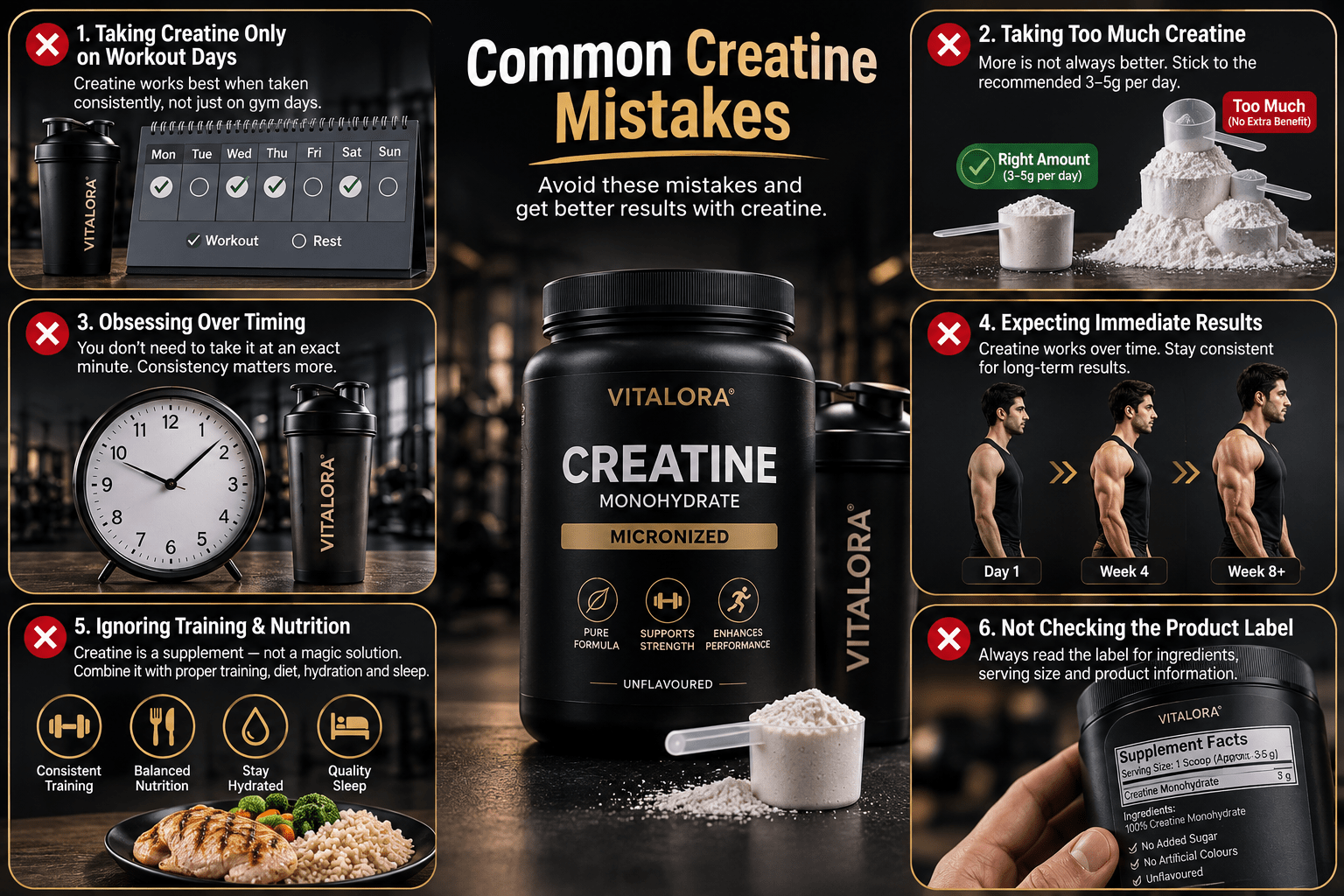
Common Creatine Mistakes
Mistake 1: Taking Creatine Only on Workout Days
Creatine is generally used consistently to maintain muscle creatine stores.
Skipping it on every rest day is unnecessary if you have chosen to supplement daily.
Mistake 2: Thinking More Creatine Means Better Results
Taking more than the recommended amount does not automatically produce better results.
More is not always better when it comes to supplements.
Mistake 3: Obsessing Over Timing
You do not need to take creatine at an exact minute before or after training.
Choose a time that makes daily supplementation easy to remember. creatine for beginners
Mistake 4: Expecting Immediate Results
Creatine is not an instant energy booster that guarantees a dramatic change after one serving.
Its effects are related to increasing muscle creatine stores over time.
Mistake 5: Ignoring Training and Nutrition
Creatine cannot replace proper training, adequate protein, balanced nutrition, hydration, or quality sleep.
It should be viewed as one part of a complete fitness routine.
Mistake 6: Choosing a Product Without Checking the Label
Before purchasing a creatine supplement, check the ingredient list, serving size, product information, and any relevant allergen or dietary information.
For a simple creatine supplement, creatine monohydrate is a well-established option. creatine for beginners
Who Should Be Cautious With Creatine?
Creatine is widely studied and commonly used by healthy adults, but supplements are not appropriate for everyone.
If you have a medical condition, take regular medication, are pregnant or breastfeeding, or have concerns about kidney or other health issues, speak with a qualified healthcare professional before starting creatine supplementation.
It is also important to follow the product’s recommended serving instructions. creatine for beginners
Frequently Asked Questions
Is creatine safe for beginners?
Creatine monohydrate has been extensively studied and is commonly used by healthy adults. Beginners should follow the recommended serving and consider their individual health circumstances. creatine for beginners
How much creatine should a beginner take?
A common daily maintenance amount is 3–5 grams of creatine monohydrate. A loading phase is optional and is not required for everyone. creatine for beginners
Should I take creatine before or after my workout?
Either can work. There is no need to focus heavily on an exact timing window. Taking it at a convenient time every day can make consistency easier. creatine for beginners
Can I take creatine on rest days?
Yes. If you are using creatine daily, continuing it on rest days helps maintain your muscle creatine stores. creatine for beginners
Does creatine make you gain fat?
Creatine does not directly cause body-fat gain. Some people experience an increase in body weight due to increased water stored in the muscles, particularly when starting supplementation. creatine for beginners
Do I need a creatine loading phase?
No. Loading is optional. You can simply take 3–5 grams per day and allow muscle creatine stores to increase gradually. creatine for beginners
Can I mix creatine with whey protein?
Yes. Creatine can be mixed into a protein shake or another suitable drink. The important factor is taking the appropriate amount consistently. creatine for beginners
Can beginners take creatine without working out?
Creatine supplementation is generally most relevant to people participating in physical training, particularly activities involving repeated high-intensity efforts. If you are not exercising, there may be less practical reason to use it as a sports supplement. creatine for beginners
Which type of creatine is best for beginners?
Creatine monohydrate is a straightforward choice because it has been extensively researched and is widely used. creatine for beginners
Does creatine need to be taken with food?
No specific meal is universally required. You can take creatine with or without food. Some people prefer taking it with a meal simply because it helps them remember their daily serving. creatine for beginners
Conclusion
Understanding creatine for beginners is much simpler than many supplement discussions make it seem.
For most healthy adults who choose to supplement, creatine monohydrate can be used consistently at around 3–5 grams per day. You do not need to obsess over exact workout timing, and a loading phase is optional.
The bigger picture still matters most. Consistent resistance training, adequate protein, balanced nutrition, hydration, sufficient sleep, and proper recovery are the foundation of progress.
Think of creatine as a supporting tool—not a replacement for the habits that actually drive your fitness journey creatine for beginners