Whey Concentrate vs Isolate for Beginners
The Ultimate Guide to Whey Concentrate vs Isolate for Beginners
Introduction
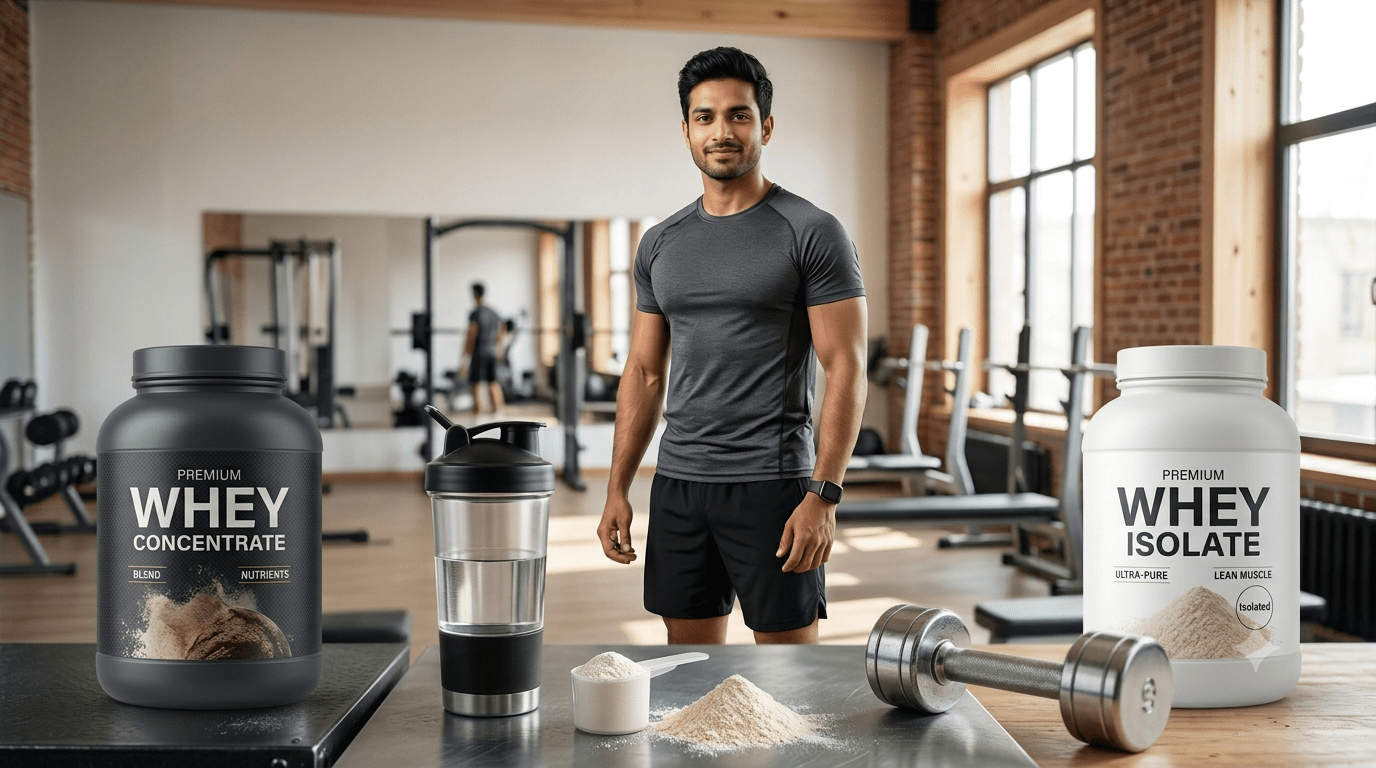
If you have recently started going to the gym, choosing a protein powder can feel more confusing than it should be. One of the first questions you may come across is whey concentrate vs isolate for beginners. Both are popular forms of whey protein, both can help increase your daily protein intake, and neither is automatically the best choice for everyone.
The real difference comes down to how each type is processed, how much protein it provides, its lactose and fat content, digestion, and price. Understanding these differences can help you choose a product based on your actual needs instead of simply choosing the one with the more expensive label.
For most beginners, getting enough total protein from a balanced diet matters more than choosing between concentrate and isolate.
Table of Contents
- What Is Whey Concentrate?
- What Is Whey Isolate?
- Whey Concentrate vs Isolate for Beginners
- Which One Is Easier to Digest?
- Which Whey Is Better After a Workout?
- Common Mistakes Beginners Make
- How to Choose the Right Whey
- Frequently Asked Questions
- Conclusion
What Is Whey Concentrate?
Whey concentrate is produced by filtering whey to remove a significant amount of non protein components while retaining protein along with varying amounts of lactose, carbohydrates and fat.
The exact protein percentage depends on the product. Because concentrate generally requires less processing than isolate, it is often more affordable.
For a beginner who can comfortably digest dairy and wants a practical protein supplement, concentrate can be a sensible starting point.
For example, if you already eat milk, curd or paneer without digestive problems, there may be little reason to automatically spend more on isolate.
What Is Whey Isolate?
Whey isolate goes through additional processing to remove more lactose, fat and other components. As a result, it generally contains a higher proportion of protein by weight.
This can make isolate useful for people who want a protein powder with less lactose or fewer calories from non protein components.
However, isolate is not automatically more effective for building muscle. If two products help you consume enough protein and fit your diet, the difference in muscle building results may be much less important than beginners often assume.
Whey Concentrate vs Isolate for Beginners
The easiest way to compare them is to look at your personal requirements.
| Factor | Whey Concentrate | Whey Isolate |
|---|---|---|
| Protein percentage | Generally lower | Generally higher |
| Lactose | Usually more | Usually less |
| Fat | Usually more | Usually less |
| Processing | Less | More |
| Price | Usually lower | Usually higher |
| Suitable for beginners | Yes | Yes |
Which One Is Easier to Digest?
Digestibility is highly individual.
Some people have no trouble with whey concentrate, while others notice bloating, gas or stomach discomfort. Lactose can be one possible reason, particularly for people who have difficulty digesting dairy.
Because whey isolate generally contains less lactose, some people find it easier to tolerate.
However, digestive problems can also come from other ingredients, serving size or simply consuming more protein than your body is accustomed to.
A practical approach is to start with the recommended serving and observe how your body responds.
Which Whey Is Better After a Workout?
Both concentrate and isolate can work well as protein after workout.
After resistance training, your body needs adequate protein as part of the recovery process. Whey provides essential amino acids and can be a convenient way to contribute to your daily protein intake.
You do not need to drink isolate simply because you finished a workout. If concentrate provides enough protein and you digest it comfortably, it can work perfectly well.
Your total protein intake across the day, along with appropriate training, calories, sleep and hydration, has a much greater influence on your overall progress.

Common Mistakes Beginners Make
Choosing Based Only on Price
The most expensive protein is not automatically the most suitable. Look at protein per serving, ingredients and your own dietary requirements.
Assuming Isolate Builds More Muscle
The word isolate can sound more advanced, but additional processing does not automatically mean better muscle growth.
Ignoring Digestion
If a protein consistently causes bloating or discomfort, pay attention to it. Your personal tolerance matters
Focusing Only on the Post Workout Shake
Protein after workout can be convenient, but your complete daily protein intake is more important than one shake.
Frequently Asked Questions
Is whey concentrate or isolate better for beginners?
Neither is universally better. Concentrate can be a good value for beginners, while isolate may suit people who prefer lower lactose and a higher protein percentage.
Can beginners take whey concentrate after a workout?
Yes. Whey concentrate can be used as a convenient protein source after training when it fits your daily nutritional needs.
Is whey isolate easier to digest?
It can be easier for some people because it generally contains less lactose. Individual tolerance still varies.
Does whey isolate build more muscle than concentrate?
Not simply because it is isolate. Both can contribute to muscle development when your overall protein intake and resistance training are appropriate.
Which is cheaper, concentrate or isolate?
Whey concentrate is generally more affordable because it usually requires less processing.
Can I get enough protein without whey?
Yes. Eggs, dairy, chicken, fish, soy, lentils, beans and other foods can all contribute to your daily protein intake. Whey is mainly a convenient option.
Conclusion
Whey Protein for Beginners in IndiaChoosing between whey concentrate vs isolate for beginners does not need to be complicated.
If you digest dairy well, want good value and simply need a convenient protein source, whey concentrate can be a sensible choice. If you want less lactose, a higher protein percentage or a product that better suits your digestion, whey isolate may be more appropriate.
The important thing is to look beyond the label. Your results will depend far more on consistent training, adequate daily protein, balanced nutrition, recovery and sleep than on whether your powder is concentrate or isolate.https://www.optimumnutrition.co.in/blogs/all/whey-isolate-vs-concentrate-which-is-actually-better-for-beginners