Nutrition Supplements for Beginners
A Smart Guide to Choosing Supplements When You Start the Gym
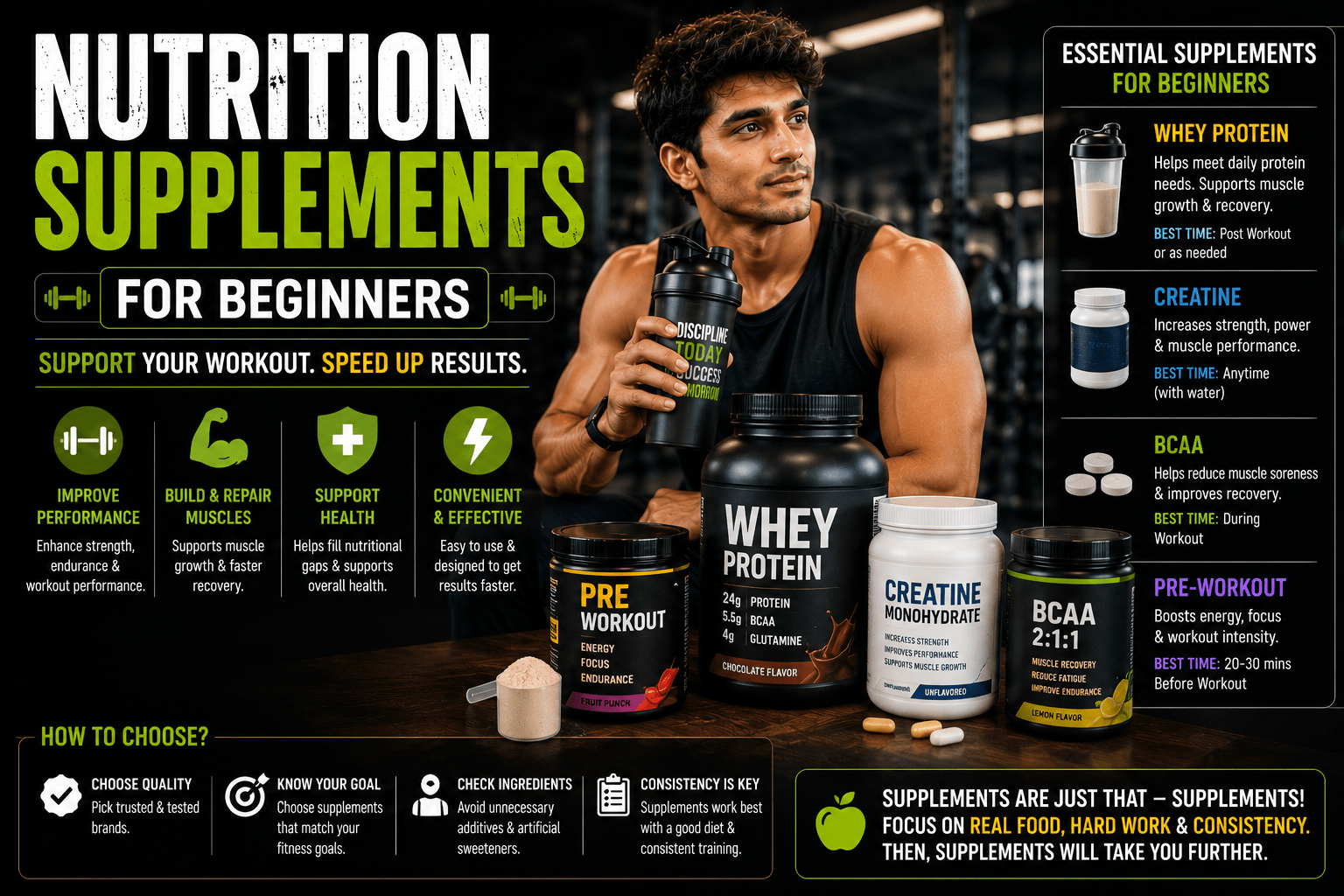
Introduction
Starting the gym often means hearing about protein powder, creatine, pre workout products, multivitamins, and many other supplements. With so many options available, beginners may wonder which products they actually need. Understanding nutrition supplements for beginners starts with one important point: supplements should support a good diet, not replace it.
A balanced diet, consistent training, adequate sleep, hydration, and appropriate calorie intake should come first. Some supplements can be useful in specific situations, but taking several products simply because other gym members use them is not a good strategy.
The right supplement depends on your diet, training goals, lifestyle, and individual needs.
Table of Contents
- What Are Nutrition Supplements?
- Do Beginners Actually Need Supplements?
- 7 Important Things to Know
- Protein Supplements
- Creatine for Beginners
- Vitamins and Other Supplements
- Common Mistakes
- Frequently Asked Questions
- Conclusion
What Are Nutrition Supplements?
Nutrition supplements for beginners include products designed to provide nutrients or other ingredients in concentrated forms. They may come as powders, capsules, tablets, liquids, or ready to consume products.
Common examples include protein powder, creatine, vitamins, minerals, amino acids, and pre workout products.
However, the word supplement is important. These products are meant to supplement your diet rather than replace nutritious food.
The NIH notes that performance supplements vary considerably in their ingredients and evidence, and only some have strong research supporting particular exercise benefits.
Do Beginners Actually Need Supplements?
Not necessarily.
If you are new to the gym, your first priorities should be regular training, sufficient food, adequate protein, hydration, and recovery.
For example, if your diet already provides enough protein through eggs, dairy, paneer, chicken, fish, beans, lentils, or soy, you may not need a protein supplement.
A supplement becomes more useful when it solves a specific nutritional or practical problem.
7 Important Things to Know
1. Start With Your Diet
Before buying nutrition supplements for beginners, look at your everyday meals.
Ask yourself whether you are eating enough protein, fruits, vegetables, whole grains, and other nutritious foods.
A supplement cannot compensate for a consistently poor diet.
2. Protein Powder Can Be Convenient
Protein powder can help when getting enough protein from regular meals is difficult.
Whey protein is a complete protein source containing essential amino acids. Plant based protein powders can also be useful depending on dietary preferences.
The goal is not to drink protein shakes unnecessarily. Use them when they make reaching your daily protein target easier.
3. Creatine Has Strong Evidence
Creatine monohydrate is one of the most researched sports supplements. Evidence shows that it can improve performance during repeated short periods of high intensity exercise, such as resistance training.
For healthy adults, creatine is generally considered safe when used appropriately. It can also cause some increase in body weight because of increased water retention.
4. Do Not Buy Everything at Once
A common beginner mistake is purchasing protein powder, creatine, pre workout, BCAAs, fat burners, multivitamins, and several other products at the same time.
There is no need to build a large supplement routine immediately.
Start with your actual nutritional needs and add products only when there is a sensible reason.
5. Be Careful With Pre Workout Products
Pre workout supplements can contain ingredients such as caffeine and other compounds intended to support exercise performance.
Caffeine may help some types of exercise, but responses vary between individuals and excessive intake can increase unwanted effects.
Beginners should pay attention to the complete ingredient label rather than choosing a product based only on its marketing claims.
6. Vitamins Are Not Automatically Better
Taking large amounts of vitamins does not necessarily improve gym performance.
If you have a nutrient deficiency, a healthcare professional can help determine the appropriate approach. Otherwise, getting nutrients primarily through a varied diet is generally preferable.
7. Check Quality and Safety
When choosing nutrition supplements for beginners, look carefully at the ingredient list, serving size, dosage information, manufacturer details, and quality testing where available.
Avoid products making unrealistic promises such as instant muscle growth or effortless fat loss.
If you take medication, have a medical condition, or are unsure whether a supplement is appropriate, speak with a qualified healthcare professional before using it. NIH also recommends professional guidance when considering performance supplements in these situations.
Protein Supplements
Protein supplements are among the most common products used by gym beginners.
For people regularly performing resistance training, a commonly used daily protein range is approximately 1.4 to 2.0 grams per kilogram of body weight.
For example, a 70 kilogram person may consider approximately 98 to 140 grams of protein across the day.
Protein powder can help fill a gap, but it does not need to provide most of your daily protein. Eggs, dairy, paneer, chicken, fish, legumes, and soy can all contribute.
Creatine for Beginners
Creatine is different from many heavily marketed gym products because it has substantial research behind it.
Creatine monohydrate is the most widely studied form. Research indicates benefits particularly for repeated high intensity activities and resistance training.
Beginners should still understand that creatine is not a replacement for training or nutrition. It is simply one optional tool that may support performance.
Common Mistakes
Buying Supplements Before Fixing Your Diet
If your meals are inconsistent, buying several supplements usually will not solve the underlying problem.
Trusting Every Online Claim
A product being popular does not prove that every claim made about it is scientifically supported.
Taking Excessive Doses
More is not always better. Some nutrients and supplement ingredients can cause problems when consumed in excessive amounts.
Ignoring Individual Needs
A supplement that works well for one person may not be appropriate for another.
Expecting Fast Results
Muscle development and fitness improvements require consistent training and nutrition over time.
Frequently Asked Questions
What are the best nutrition supplements for beginners?
Protein powder and creatine are among the better studied options for people involved in resistance training, but whether you need them depends on your diet and goals.
Should beginners take protein powder?
Only if it helps them conveniently meet their daily protein requirements. It is not mandatory if adequate protein is already coming from food.
Is creatine safe for beginners?
Creatine monohydrate is generally considered safe for healthy adults when used appropriately. People with medical conditions should discuss supplementation with a healthcare professional.
Do beginners need multivitamins?
Not automatically. A varied diet can provide many essential nutrients. Supplementation may be appropriate when there is a confirmed deficiency or specific nutritional need.
Should I take supplements before or after the gym?
Timing depends on the specific supplement. For many beginners, meeting daily nutrition requirements is more important than creating a complicated supplement schedule.
Can supplements replace a healthy diet?
No. The NIH specifically notes that performance supplements cannot substitute for a nutritionally adequate diet and proper hydration.
Conclusion
Choosing nutrition supplements for beginners should be based on need rather than hype. Start by building a balanced diet, consistent workout routine, adequate protein intake, proper hydration, and good recovery habits.
Protein powder can provide convenience when dietary protein is difficult to reach, while creatine monohydrate has strong evidence for supporting performance during high intensity exercise. Other products should be evaluated carefully because evidence and safety can vary considerably.
The smartest approach is simple: fix the basics first, understand what a supplement is supposed to do, and only then decide whether it deserves a place in your routine.
CTA
Before buying any supplement, check its ingredients, purpose, dosage, and evidence. Making an informed decision is far more valuable than following the latest gym trend.