Fitness Nutrition for Beginners
A Simple Guide to Eating Well and Supporting Your Gym Goals
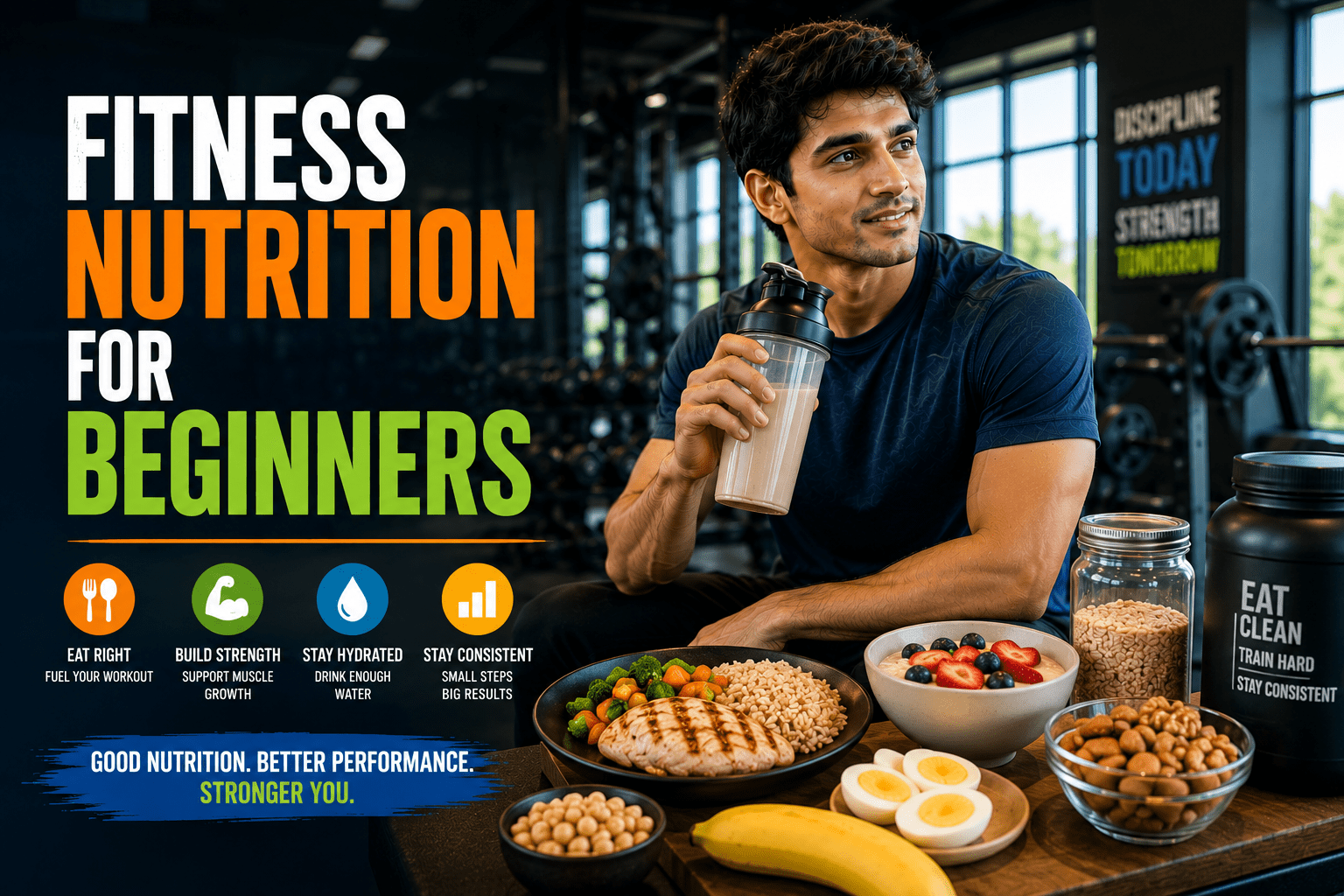
Introduction
Starting a fitness routine is not only about choosing the right exercises. What you eat every day also affects your energy, recovery, and ability to make progress. This is why understanding fitness nutrition for beginners is so important when you first start going to the gym.
You do not need an expensive meal plan or a kitchen full of supplements. A simple diet built around protein, carbohydrates, healthy fats, fruits, vegetables, and enough fluids can provide a strong foundation.
The right approach also depends on your goal. Someone trying to build muscle may need more calories, while someone trying to lose body fat may need better calorie control.
Table of Contents
- What Is Fitness Nutrition?
- 7 Important Nutrition Tips
- How Much Protein Do Beginners Need?
- What to Eat Before and After Training
- Common Nutrition Mistakes
- Frequently Asked Questions
- Conclusion
What Is Fitness Nutrition?
Fitness nutrition for beginners means choosing foods and eating patterns that support your training, recovery, health, and individual fitness goals.
Protein helps provide amino acids needed for muscle repair and development. Carbohydrates provide energy for physical activity, while dietary fats support several important functions in the body.
Calories matter too. Eating more energy than your body uses can support weight gain, while consuming fewer calories can contribute to weight loss. The appropriate approach depends on your personal objective.
7 Important Nutrition Tips
1. Make Protein a Priority
Include a protein source in your regular meals. Eggs, milk, yogurt, paneer, chicken, fish, soy, beans, and lentils are practical choices.
For people who regularly perform resistance training, around 1.4 to 2.0 grams of protein per kilogram of body weight per day is a commonly used range.
For example, someone weighing 70 kilograms could consider approximately 98 to 140 grams of protein throughout the day.
2. Include Carbohydrates
Carbohydrates can provide useful energy for training. Rice, oats, potatoes, fruits, whole grains, and other carbohydrate foods can fit into a balanced fitness diet.
There is no need to completely remove carbohydrates simply because you have started exercising.
3. Choose Useful Sources of Fat
Nuts, seeds, eggs, dairy products, fish, and suitable cooking oils can contribute dietary fats.
The goal is not to avoid fat completely. Instead, pay attention to portions and your overall calorie intake.
4. Eat More Nutrient Rich Foods
A good fitness nutrition for beginners routine should include vegetables, fruits, whole grains, legumes, and protein rich foods.
These foods can provide nutrients that are difficult to obtain from a diet based mainly on processed snacks.
5. Keep Convenient Snacks Available
A busy schedule can make healthy eating difficult. Keep simple options such as boiled eggs, yogurt, roasted chickpeas, fruit, milk, paneer, or a suitable protein bar available.
This makes it easier to avoid skipping meals when you are short on time.
6. Stay Hydrated
Water should be your main source of hydration during normal daily activities. Your requirements can increase when you exercise, sweat heavily, or train in hot conditions.
Instead of following one fixed amount, consider your thirst, exercise duration, weather, and individual needs.
7. Build Consistency
One healthy meal will not transform your body. Similarly, one occasional treat will not destroy your progress.
The best fitness nutrition for beginners is a routine that you can realistically follow for months. Consistency is usually more useful than extreme dieting.
How Much Protein Do Beginners Need?
Protein requirements vary according to body weight, training frequency, age, goals, and overall diet.
A commonly used range for people who regularly exercise is approximately 1.4 to 2.0 grams per kilogram of body weight per day.
For example:
60 kg: approximately 84 to 120 grams
70 kg: approximately 98 to 140 grams
80 kg: approximately 112 to 160 grams
These figures represent total daily protein rather than the amount you need from one meal or snack.
What to Eat Before and After Training
Good fitness nutrition for beginners also involves understanding how food fits around your workout.
Before exercise, a meal or snack containing carbohydrates and some protein can be useful. Yogurt with fruit, oats with milk, eggs with toast, or a small meal containing rice and paneer are simple examples.
After training, you can choose a normal balanced meal containing protein, carbohydrates, vegetables, and fluids.
There is no need to become overly concerned about eating within a very specific number of minutes after exercise. Your overall daily nutrition remains more important.
Common Nutrition Mistakes
A common beginner mistake is drastically reducing food intake because of fear of gaining fat. Your calorie needs depend on your individual goal and activity level.
Another mistake is consuming too many supplements while ignoring basic nutrition. Protein powders, creatine, and other products can have specific uses, but they cannot replace a balanced diet.
Some beginners also copy another person’s diet without considering differences in body weight, training volume, lifestyle, and goals.
Finally, do not forget recovery. Good food choices work better when combined with sufficient sleep and consistent training.
Frequently Asked Questions
What is the best fitness nutrition for beginners?
Start with balanced meals containing protein, carbohydrates, healthy fats, vegetables, fruits, whole grains, and adequate fluids.
How much protein should a beginner eat?
People who regularly perform resistance training can commonly consider around 1.4 to 2.0 grams of protein per kilogram of body weight per day.
Should beginners use supplements?
Supplements are not automatically necessary. Beginners should first establish consistent training and a balanced diet. Specific supplements can then be considered according to individual needs.
What should I eat before the gym?
A light meal containing carbohydrates and some protein can be a practical choice. Examples include yogurt with fruit, oats with milk, or eggs with toast.
What should I eat after working out?
A balanced meal containing protein, carbohydrates, vegetables, and fluids is a good option. Your total daily diet matters more than a strict post workout eating window.
Can beginners eat rice and roti?
Yes. Both can be part of a balanced fitness diet. Your portion should fit your total calorie needs and fitness goal.
Conclusion
Good fitness nutrition for beginners does not require complicated rules. Focus on regular protein, useful carbohydrate sources, healthy fats, fruits, vegetables, adequate fluids, and sensible portions.
Your workout provides the training stimulus, while nutrition and recovery help your body respond to it. Instead of following every new diet trend, build eating habits that fit your lifestyle and can be maintained consistently.
As you gain more training experience, you can adjust your calorie and nutrient intake according to your specific goal.
CTA
Start with a few simple changes such as adding a protein source to each main meal, keeping nutritious snacks available, and drinking enough water. Small habits can create a strong foundation for your fitness journey.