Daily Protein Intake for Beginners
How Much Protein Do You Need Every Day to Support Your Fitness Goals?
Introduction
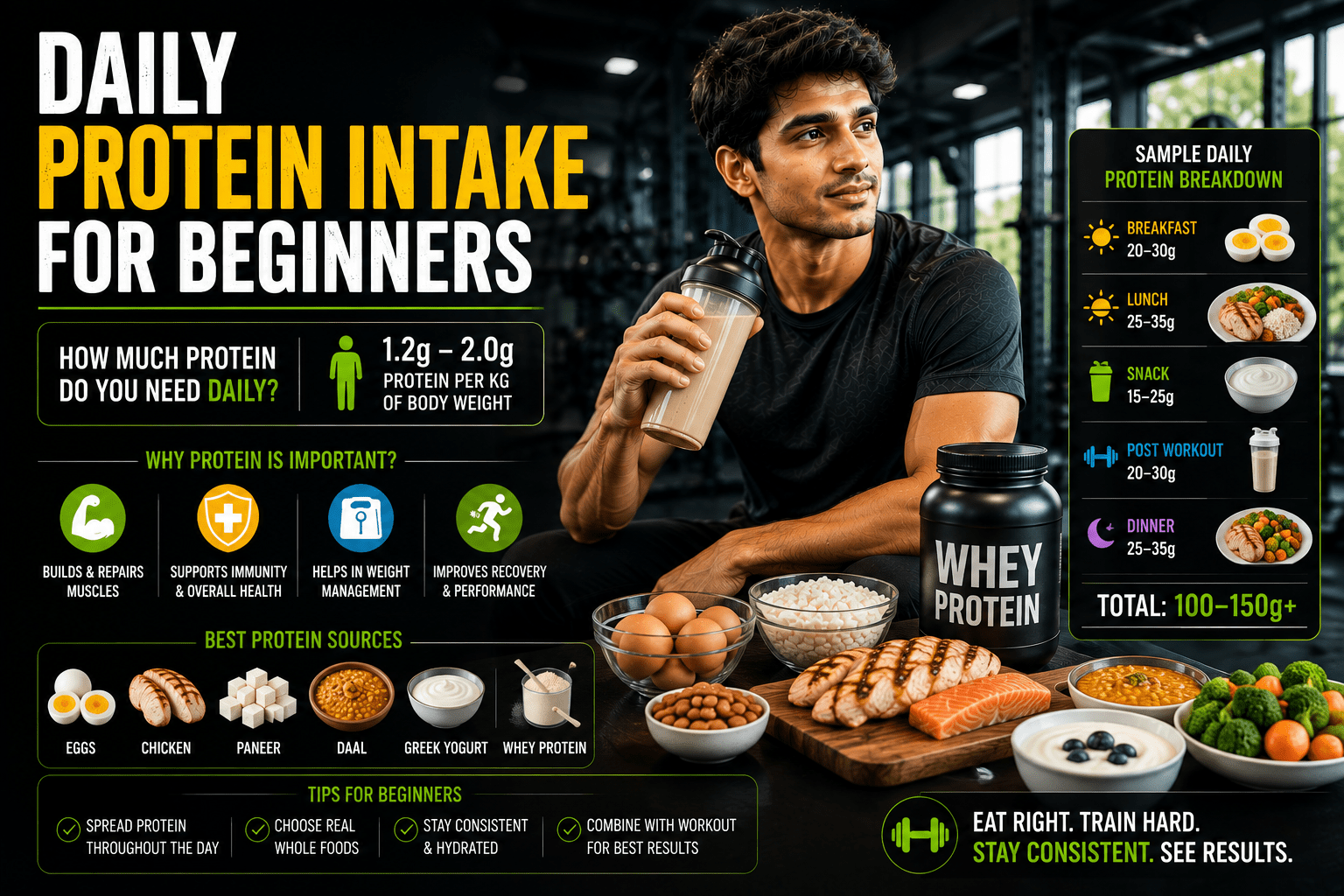
Starting a gym routine often brings one important question: how much protein should you eat every day? With so much conflicting advice online, beginners can easily become confused. Understanding your daily protein intake for beginners is actually simpler than it may seem.
Protein helps provide amino acids that your body uses for muscle repair and development. However, eating more protein than you need will not automatically produce more muscle. Your training, total calories, sleep, hydration, and overall diet also matter.
For most beginners, the goal should be to establish a practical protein routine that fits their body weight, fitness goal, food preferences, and lifestyle.
Table of Contents
- Why Daily Protein Matters
- How Much Protein Should Beginners Eat?
- Simple Protein Calculation
- Best Protein Foods for Beginners
- How to Spread Protein Throughout the Day
- Protein Before and After the Gym
- Common Mistakes
- Frequently Asked Questions
- Conclusion
Why Daily Protein Matters
When you perform resistance training, your muscles experience stress that encourages the body to adapt. Adequate protein provides the amino acids needed to support this process.
This is why daily protein intake for beginners should be considered alongside a consistent training program.
Protein is not only important for people trying to build visible muscle. It is also an important nutrient for maintaining and repairing body tissues.
The key is consistency. Having enough protein on most days is more useful than eating a very large amount occasionally.
How Much Protein Should Beginners Eat?
For people who regularly perform resistance training, a commonly used range is approximately 1.4 to 2.0 grams of protein per kilogram of body weight per day.
Here are simple examples:
50 kg: 70 to 100 grams
60 kg: 84 to 120 grams
70 kg: 98 to 140 grams
80 kg: 112 to 160 grams
These figures represent total protein from your complete diet, including food and supplements.
Your ideal target can vary depending on your goals, activity level, age, body composition, and total calorie intake. If you have a medical condition or specific dietary concern, personalized advice from a qualified professional is more appropriate.
Simple Protein Calculation
You can estimate your daily protein intake for beginners using a simple calculation.
Body weight in kilograms × 1.4 to 2.0 = approximate daily protein range
For example, if you weigh 65 kilograms:
65 × 1.4 = 91 grams
65 × 2.0 = 130 grams
That gives an approximate range of 91 to 130 grams per day for someone regularly performing resistance training.
You do not have to hit an exact number every single day. Think of this as a practical target range rather than a rigid rule.
Best Protein Foods for Beginners
Good daily protein intake for beginners does not require expensive supplements. Many familiar foods can provide useful amounts of protein.
Eggs
Eggs are easy to prepare and can be included at breakfast, lunch, or as a snack.
Milk and Yogurt
Milk and yogurt are convenient dairy sources that can fit into breakfast or between meal snacks.
Paneer
Paneer is a useful vegetarian option. It can be combined with vegetables, roti, or rice.
Chicken and Fish
These are protein rich foods that can form part of a balanced lunch or dinner.
Dal and Beans
Lentils, chickpeas, kidney beans, and other legumes provide protein along with carbohydrates and fibre.
Soy Foods
Soy can be useful for people who prefer vegetarian or plant focused meals.
Protein Powder
Protein powder can make it easier to reach your protein target when regular food is inconvenient. It is a supplement, not a replacement for a varied diet.
How to Spread Protein Throughout the Day
Instead of consuming most of your protein in one meal, try distributing it across your daily meals.
For example, if your target is around 120 grams, you could include protein at breakfast, lunch, an afternoon snack, and dinner.
A simple routine might look like this:
Breakfast: Eggs with milk
Lunch: Chicken or paneer with rice and vegetables
Snack: Yogurt or another protein rich snack
Dinner: Dal with paneer or another protein source
This makes daily protein intake for beginners easier to manage and can help create a consistent eating routine.
Protein Before and After the Gym
You do not need to worry about consuming protein within a very narrow period after exercise.
Before training, a meal containing protein and carbohydrates can be useful. Yogurt with fruit, eggs with toast, or oats with milk are simple options.
After training, you can have a regular balanced meal containing protein, carbohydrates, and vegetables.
For most people, total daily protein intake for beginners matters more than trying to consume protein at an exact minute after finishing a workout.
Common Mistakes
Eating Excessive Protein
More protein does not automatically mean more muscle. Once your nutritional needs are covered, adding excessive amounts is unlikely to provide proportional benefits.
Ignoring Calories
Protein is important, but total calorie intake also influences whether you gain, maintain, or lose body weight.
Depending Only on Supplements
Protein shakes and bars can be convenient, but nutritious whole foods should remain an important part of your diet.
Copying Someone Else’s Diet
Your protein requirement can be different from another gym member because body weight, training, lifestyle, and goals vary.
Forgetting Recovery
Good daily protein intake for beginners works best when combined with adequate sleep, hydration, and a well structured training routine.
Frequently Asked Questions
What is the daily protein intake for beginners?
For people regularly performing resistance training, approximately 1.4 to 2.0 grams of protein per kilogram of body weight per day is a commonly used range.
How much protein does a 60 kg beginner need?
Using the 1.4 to 2.0 grams per kilogram range, a 60 kilogram person could consider approximately 84 to 120 grams of protein per day.
Is 100 grams of protein enough for a beginner?
It can be enough for some people, but it depends on body weight, training, goals, and overall nutrition.
Should beginners take protein powder?
Not necessarily. If you can comfortably meet your protein needs through food, a supplement may not be necessary. Protein powder is mainly a convenient option.
Should I eat protein after every workout?
You do not have to. A protein rich meal or snack after training can be convenient, but your total daily intake is more important.
Can beginners get enough protein from vegetarian foods?
Yes. Paneer, yogurt, milk, soy, lentils, chickpeas, beans, and other vegetarian foods can contribute significantly to your protein intake.
Conclusion
Understanding daily protein intake for beginners is an important part of building a sensible fitness routine. A practical range of around 1.4 to 2.0 grams per kilogram of body weight can be a useful starting point for people regularly performing resistance training.
Focus on everyday protein sources such as eggs, dairy, paneer, chicken, fish, lentils, beans, and soy. Spread your intake across the day and use supplements only when they make your routine more convenient.
Remember that protein is just one part of fitness nutrition. Consistent training, appropriate calorie intake, hydration, quality sleep, and a balanced diet all contribute to sustainable progress.
CTA
Calculate your approximate protein requirement based on your body weight, then build your meals around simple protein rich foods. A consistent routine is more valuable than trying to follow complicated nutrition rules.