Whey Protein Side Effects for Beginners
A Beginner's Guide to Common Side Effects, Causes, Safety and Proper Use

Introduction
whey peotein side effects for beginners
Whey protein is one of the most popular protein supplements among people who exercise, but beginners often have an important question: Can whey protein cause side effects?
The answer depends on the individual, the type of whey protein, the amount consumed and the ingredients in the particular product. (whey peotein side effects for beginners) Whey Protein Side Effects for Beginners
For many healthy people, whey protein can be a convenient way to increase daily protein intake. However, some people may experience digestive discomfort or other reactions, particularly when they consume more than they need or have difficulty tolerating dairy-based products.
Understanding whey protein side effects for beginners can help you use the supplement more responsibly and recognize when a problem may be related to the product.
Whey should also be viewed as a supplement rather than a replacement for a balanced diet. Whey Protein Side Effects for Beginners
What Is Whey Protein?
whey peotein side effects for beginners
Whey protein is a milk-derived protein that is commonly used to supplement daily protein intake.
It provides essential amino acids and is popular among people who perform resistance training because it is convenient and easy to prepare.
The two common forms beginners encounter are whey protein concentrate and whey protein isolate.
Whey concentrate generally contains more lactose and other milk components than isolate, while isolate is processed further and usually contains less lactose.
The exact nutritional profile varies by product, so checking the label is important Whey Protein Side Effects for Beginners
Common Whey Protein Side Effects
whey peotein side effects for beginners
Not everyone experiences side effects from whey protein. ( Whey Protein Side Effects for Beginners )
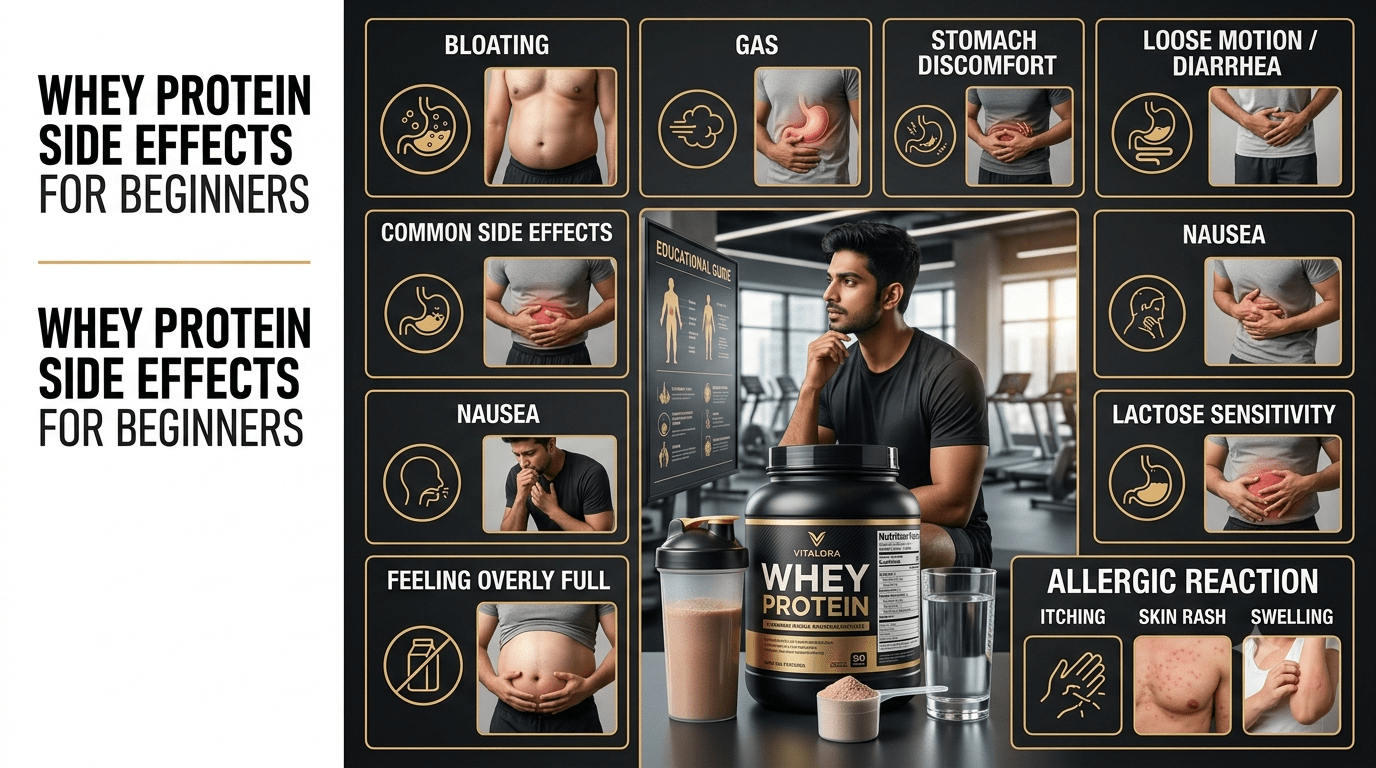
However, some beginners may notice: whey peotein side effects for beginners
- Bloating
- Gas
- Stomach discomfort
- Loose stools
- Nausea
- Feeling overly full
- Digestive discomfort after drinking a shake
These symptoms may be related to lactose, the amount consumed, other ingredients in the product or simply an individual’s digestive tolerance.
If you experience persistent or severe symptoms, do not assume that whey is the only possible cause. Consider speaking with a qualified healthcare professional. Whey Protein Side Effects for Beginners
Why Can Whey Protein Cause Bloating?
whey peotein side effects for beginners
Whey protein bloating is one of the complaints some beginners report. ( Whey Protein Side Effects for Beginners )
One possible reason is lactose.
Whey concentrate can contain a noticeable amount of lactose, the naturally occurring sugar found in milk. People who have difficulty digesting lactose may experience symptoms such as gas, bloating or abdominal discomfort after consuming dairy products.
Another possible reason is consuming a large serving at once.
For example, someone who normally consumes very little protein and suddenly starts drinking large shakes may experience digestive discomfort.
Other ingredients in flavored protein powders, such as certain sweeteners or thickeners, may also bother some people (whey peotein side effects for beginners)
Whey Protein and Lactose Sensitivity
Lactose sensitivity is different from a milk allergy.
People who have difficulty digesting lactose may experience digestive symptoms after consuming lactose-containing products.
Whey isolate generally contains less lactose than whey concentrate, although the exact amount depends on the product and processing method.
If you notice digestive discomfort after drinking whey, check the product’s nutrition and ingredient information.
You may also consider whether you tolerate other dairy foods such as milk, curd or paneer.
If symptoms continue, consult a healthcare professional rather than simply increasing or changing supplements repeatedly Whey Protein Side Effects for Beginners
Can Whey Protein Cause Stomach Problems?
whey peotein side effects for beginners
For some people, yes.
Stomach discomfort may occur because of Whey Protein Side Effects for Beginners
Large Serving Sizes
Taking a very large amount of protein at once may be difficult for some people to digest comfortably.
Lactose
Lactose can cause digestive symptoms in people who do not digest it well. Whey Protein Side Effects for Beginners
Added Ingredients
Some protein powders contain sweeteners, flavoring agents or other ingredients that certain people may not tolerate well Whey Protein Side Effects for Beginners
Sudden Dietary Changes
If you suddenly increase your protein intake significantly, your digestive system may take time to adjust.
A simple approach is to follow the product’s recommended serving and pay attention to how your body responds Whey Protein Side Effects for Beginners
Whey Protein Allergies
whey peotein side effects for beginners
A milk allergy is different from lactose intolerance. (whey peotein side effects for beginners)
People with a milk-protein allergy may react to proteins found in milk, including whey.
Possible allergic reactions can include symptoms such as: Whey Protein Side Effects for Beginners
- Skin reactions
- Swelling
- Breathing difficulties
- Digestive symptoms
- Other allergic responses
If you suspect that you have a milk-protein allergy, whey protein may not be appropriate for you.
Seek medical advice before using a whey supplement if you have a known milk allergy.
If you develop a serious allergic reaction after consuming a product, seek urgent medical attention whey peotein side effects for beginners
Can Too Much Whey Protein Be a Problem?
whey peotein side effects for beginners
More protein is not automatically better.
Whey should help complement your overall diet rather than become the main source of your nutrition.
Taking unnecessary amounts may:
- Add extra calories
- Cause digestive discomfort
- Make your diet less varied
- Be an unnecessary expense
Your total daily protein requirement depends on factors such as body weight, age, activity level, training goals and overall diet.
For people who perform resistance training, a commonly used range is approximately 1.4–2.0 grams of protein per kilogram of body weight per day, depending on individual circumstances.
That total includes protein from food as well as supplements ( whey peotein side effects for beginners)
How to Reduce Whey Protein Side Effects
whey peotein side effects for beginners
1. Check Your Serving Size
Do not automatically take multiple scoops.
Start with the recommended serving on the product label.
2. Try Mixing It With More Water
A thicker, concentrated shake may feel uncomfortable for some people.
Adding more water can make the shake lighter.
3. Consider the Type of Whey
If lactose appears to be an issue, a whey isolate may be worth discussing with a healthcare professional or nutrition professional, depending on your circumstances
4. Check the Ingredient List
Look beyond the protein number.
Check sweeteners, flavoring ingredients, allergens and other components
5. Avoid Sudden Large Increases
If your normal diet is low in protein, gradually improving your overall protein intake may be more comfortable than immediately consuming very large amounts.
6. Maintain a Balanced Diet
Whey should complement foods such as eggs, dairy, meat, fish, soy, lentils, beans and other nutritious protein sources.
whey peotein side effects for beginners
When Should You Stop Using Whey?
whey peotein side effects for beginners
Mild digestive discomfort may indicate that the product or serving size does not suit you.
However, symptoms such as significant swelling, difficulty breathing, severe abdominal symptoms or signs of a serious allergic reaction should not be ignored.
Stop using the product and seek appropriate medical attention if you experience concerning symptoms.
If you have a known medical condition, food allergy, kidney disease or other health concern, discuss supplement use with a qualified healthcare professional before starting whey protein.
Common Mistakes Beginners Make
whey peotein side effects for beginners
Mistake 1: Taking Too Much
More servings do not automatically produce better results.
Mistake 2: Ignoring Digestive Symptoms
If a particular product repeatedly causes discomfort, do not simply keep increasing the serving
Mistake 3: Not Checking Ingredients
Protein content is important, but the full ingredient list matters too.
Mistake 4: Replacing Every Meal With Whey
Whey mainly helps provide protein. Whole foods provide a broader range of nutrients.
Mistake 5: Assuming Every Whey Product Is the Same
Different products can contain different amounts of protein, lactose, sweeteners, flavors and other ingredients
Frequently Asked Questions
Is whey protein safe for beginners?
Whey can be a convenient protein source for many healthy people. However, individual tolerance varies, particularly among people with dairy intolerance or milk allergies.
What are the most common whey protein side effects?
Some people may experience bloating, gas, stomach discomfort, loose stools or nausea, especially if they are sensitive to lactose or certain ingredients.
Does whey protein cause gas?
It can in some people. Lactose or other ingredients in the product may contribute to gas and digestive discomfort.
Can whey protein cause bloating?
Yes, some people may experience bloating after consuming whey, particularly if they have difficulty digesting lactose or consume a large serving.
Is whey isolate better for people with lactose sensitivity?
Whey isolate generally contains less lactose than whey concentrate, but the exact amount varies by product. People with significant lactose intolerance should check the product information carefully.
Can I take whey protein every day?
Whey can be used regularly when it fits your overall dietary needs. You do not need to take it simply because you exercise every day.
Can whey protein damage the kidneys?
For healthy people, protein intake within appropriate dietary ranges is generally considered different from claims that normal protein consumption automatically damages healthy kidneys. However, people with kidney disease or other medical conditions should seek individualized medical advice before increasing protein or using supplements.
Should beginners stop whey if they experience stomach discomfort?
If symptoms repeatedly occur, consider stopping the product and discussing the issue with a healthcare professional. The cause may be lactose, another ingredient, serving size or something unrelated to whey.
Can I take whey protein with water?
Yes. Water is a simple way to prepare whey and may be easier for some people than mixing it with milk.
Is whey protein necessary for muscle growth?
No. Whey is not essential. You can meet your protein requirements through regular foods. Whey is mainly a convenient option when getting enough protein from food is difficult.
Conclusion
whey peotein side effects for beginners
Understanding whey protein side effects for beginners is about knowing your individual tolerance and using supplements sensibly.
Whey protein can be a convenient way to increase protein intake, but some people may experience bloating, gas or digestive discomfort. Lactose sensitivity, serving size and other ingredients can all play a role.
Start with an appropriate serving, read the product label and pay attention to how your body responds.
Most importantly, remember that whey is only one part of your nutrition plan.
Balanced food + adequate protein + consistent training + hydration + recovery + quality sleep form the foundation of a successful fitness routine.
If you have a known milk allergy, medical condition or persistent symptoms, speak with a qualified healthcare professional before continuing supplementation whey side effects