Whey Protein Shake With Milk
A Creamy and Convenient Protein Option for Fitness Enthusiasts
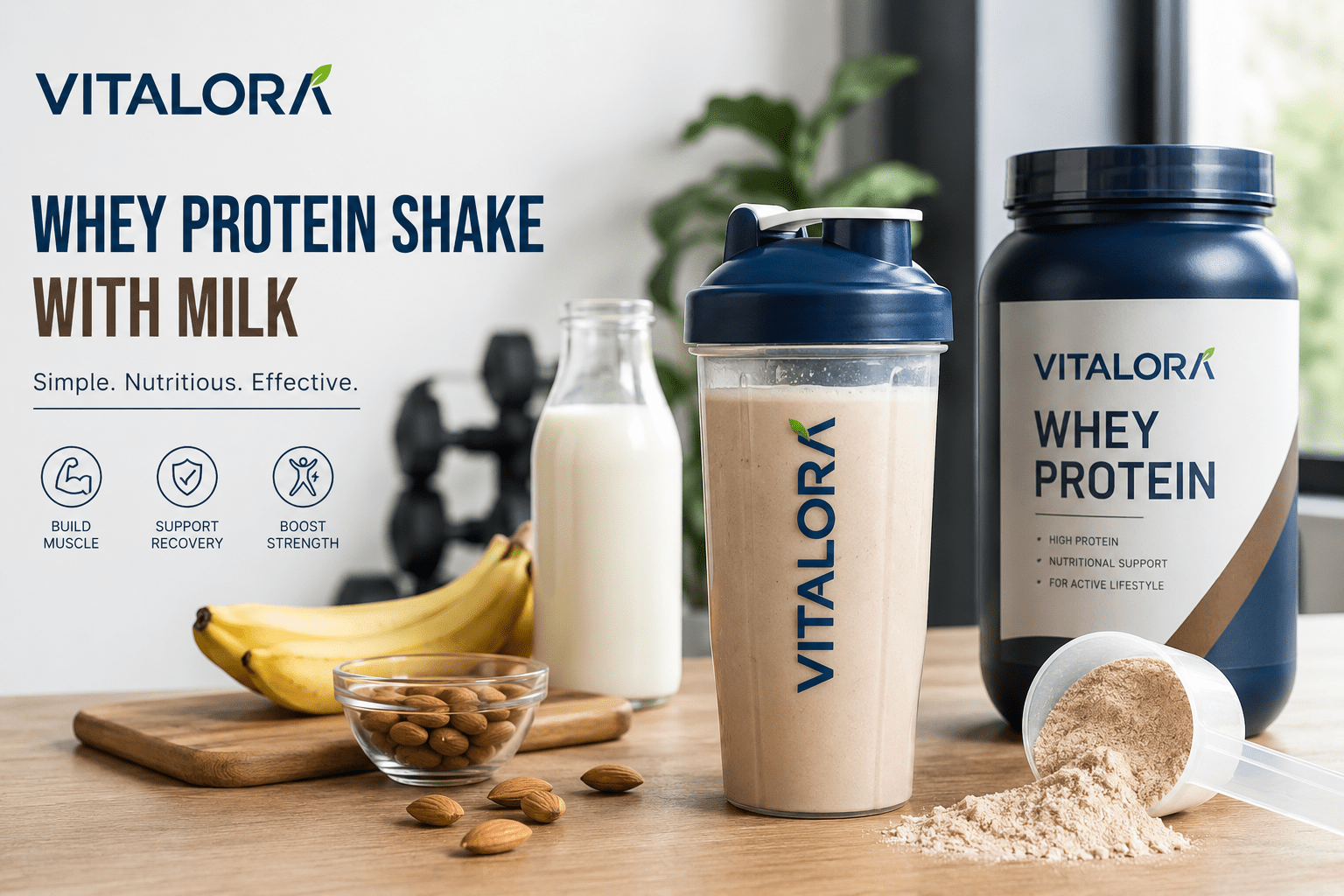
Introduction
A whey protein shake with milk is a simple option for people who want a more filling and creamy protein drink. Milk adds extra protein, carbohydrates, calories, and nutrients to a shake, while whey protein provides a convenient source of high quality protein.
For beginners, the idea is straightforward. Mix your preferred whey protein with milk and adjust the quantity according to your taste and nutrition goals. However, the right amount of milk and the overall ingredients can make a meaningful difference to the calories and nutrition of your whey protein shake with milk.
Table of Contents
- Why Choose Whey Protein With Milk?
- How to Make Whey Protein Shake With Milk
- Calories and Protein Content
- Best Time to Drink It
- Common Mistakes
- Frequently Asked Questions
- Conclusion
Why Choose Whey Protein With Milk?
The biggest advantage of a whey protein shake with milk is that it provides protein from two sources. Whey contributes concentrated protein, while milk naturally contains protein along with calcium and other nutrients.
Milk also creates a thicker and creamier texture than water. This can make a protein shake more satisfying, particularly when used as a snack between meals.
For example, someone who struggles to eat enough calories during a muscle building phase may find a whey protein shake with milk easier to consume than another full meal.
However, this does not mean milk is always the better choice. Someone trying to keep calories lower may prefer water.
How to Make Whey Protein Shake With Milk
Preparing a whey protein shake with milk is simple.
Basic Recipe
Use approximately 200 to 300 milliliters of chilled milk and add one serving of whey protein according to the product label. Pour the milk into a shaker first, add the powder, close the lid securely, and shake until smooth.
You can also use a blender if you want a thicker texture. Adding a few ice cubes can make the drink colder without significantly changing its nutrition.
If you want more flavor, banana, berries, oats, or a small amount of peanut butter can be added. Keep in mind that every extra ingredient increases the total calories.
Calories and Protein Content
The nutrition of a whey protein shake with milk depends on the type and quantity of milk and the whey protein you choose.
Low fat milk generally provides fewer calories than full fat milk, while both can contribute protein and other nutrients. Your whey powder will also have its own protein, carbohydrate, fat, and calorie content.
The best approach is to check both nutrition labels rather than guessing.
If your goal is weight management, measure your ingredients carefully. If your goal is gaining weight, adding milk and nutrient rich ingredients can make your whey protein shake with milk more energy dense.
Best Time to Drink It
There is no single perfect time to have a whey protein shake with milk.
You can drink it after exercise, at breakfast, or between meals. What matters most is your total daily protein intake and overall diet.
After training, a whey protein shake with milk can be convenient when you cannot have a complete meal immediately. If you are eating a balanced meal soon after your workout, you may not need a shake at that exact time.
Consistency with your overall nutrition is more important than following a strict clock.
Common Mistakes
Adding Too Many Ingredients
Banana, oats, peanut butter, honey, and full fat milk can turn a simple shake into a high calorie meal. This may be useful for some goals but unnecessary for others.
Ignoring Lactose Tolerance
Some people experience digestive discomfort after consuming milk. If that happens, consider lactose free milk or another suitable option.
Using a Shake Instead of Balanced Meals
A protein shake is convenient, but it should complement nutritious meals rather than replace most of them.
Forgetting Total Daily Protein
One shake cannot compensate for an otherwise poor diet. Include protein sources such as eggs, dairy, fish, chicken, soy, beans, and lentils throughout the day.
Frequently Asked Questions
Is whey protein shake with milk good for muscle building?
It can be a convenient way to increase protein and calories, which may support a muscle building diet when combined with resistance training.
Is whey protein better with milk or water?
Neither is universally better. Milk provides additional calories and nutrients, while water creates a lighter drink with fewer calories.
Can I drink whey protein with milk after a workout?
Yes. A whey protein shake with milk can be a convenient post workout option when it fits your overall nutrition plan.
How much milk should I add to whey protein?
Around 200 to 300 milliliters is a practical starting point. Adjust the amount according to the consistency you prefer.
Can I drink a protein shake with milk every day?
It can be included regularly if it fits your nutritional needs, calorie intake, and dietary preferences.
Can whey protein with milk help with weight gain?
A whey protein shake with milk can help increase calorie and protein intake, which may support weight gain when combined with an appropriate overall diet.
Conclusion
A whey protein shake with milk is an easy and practical way to add protein, calories, and nutrients to your daily diet. Milk makes the drink creamier and contributes additional protein, while whey makes it convenient to increase your protein intake.
Whether you choose milk or water depends on your personal goals. Consider your calorie requirements, digestion, food preferences, and overall diet before deciding.
A whey protein shake with milk works best as part of a balanced nutrition plan that includes nutritious foods, regular training, adequate hydration, and proper recovery.