Beginner Gym Nutrition Plan
A Simple Daily Eating Guide for Your First Fitness Journey
Introduction
Starting a gym routine can feel much easier when you know what to eat. Many beginners focus heavily on workouts but remain confused about protein, carbohydrates, meal timing, calories, and snacks. A practical beginner gym nutrition plan can remove much of this confusion.
You do not need an expensive diet or complicated recipes to support your training. A balanced eating routine with enough protein, carbohydrates, healthy fats, fruits, vegetables, and fluids can provide a strong foundation.
Your exact diet should depend on your goal. Building muscle, losing body fat, improving strength, and maintaining weight can require different calorie and food choices.
Table of Contents
- What Is a Beginner Gym Nutrition Plan?
- 7 Important Nutrition Rules
- Simple Daily Meal Plan
- Protein Requirements for Beginners
- Pre Workout and Post Workout Nutrition
- Common Mistakes to Avoid
- Frequently Asked Questions
- Conclusion
What Is a Beginner Gym Nutrition Plan?
A beginner gym nutrition plan is a structured approach to eating that helps you provide your body with enough energy and nutrients to support exercise and recovery.
Protein provides amino acids used for muscle repair and development. Carbohydrates can provide energy for training, while dietary fats support normal body functions.
Calories are equally important. If you want to gain muscle, you may need sufficient energy to support growth. If fat loss is your goal, calorie intake becomes an important consideration.
The best plan is therefore not the same for everyone.
7 Important Nutrition Rules
1. Include Protein in Every Main Meal
Eggs, paneer, milk, yogurt, chicken, fish, soy, beans, and lentils are practical choices.
Spreading protein across your meals can make it easier to reach your daily requirement without relying on one large serving.
2. Do Not Remove Carbohydrates
Rice, roti, oats, potatoes, fruits, and whole grains can all fit into a fitness diet.
Carbohydrates can be particularly useful around training because they provide an important source of energy.
3. Add Vegetables and Fruits
A balanced beginner gym nutrition plan should not focus only on protein. Vegetables and fruits provide fibre, vitamins, minerals, and other beneficial compounds.
Try to include different types throughout the week rather than eating the same food every day.
4. Include Healthy Fat Sources
Nuts, seeds, eggs, fish, dairy products, and suitable cooking oils can contribute dietary fats.
Because some fat rich foods are calorie dense, portion sizes can matter when managing your total energy intake.
5. Keep Simple Snacks Ready
Busy days can make it difficult to follow your diet. Keep convenient options such as boiled eggs, yogurt, fruit, roasted chickpeas, milk, paneer, or a suitable protein bar available.
This can help prevent unnecessary dependence on highly processed snacks.
6. Drink Enough Water
Hydration is an important part of exercise nutrition. Water should generally be your main everyday drink.
Your fluid requirements can increase during exercise, hot weather, or periods of heavy sweating.
7. Stay Consistent
A beginner gym nutrition plan should be realistic enough to follow for months.
You do not need to eat perfectly every day. Focus on creating reliable habits rather than following extreme restrictions.
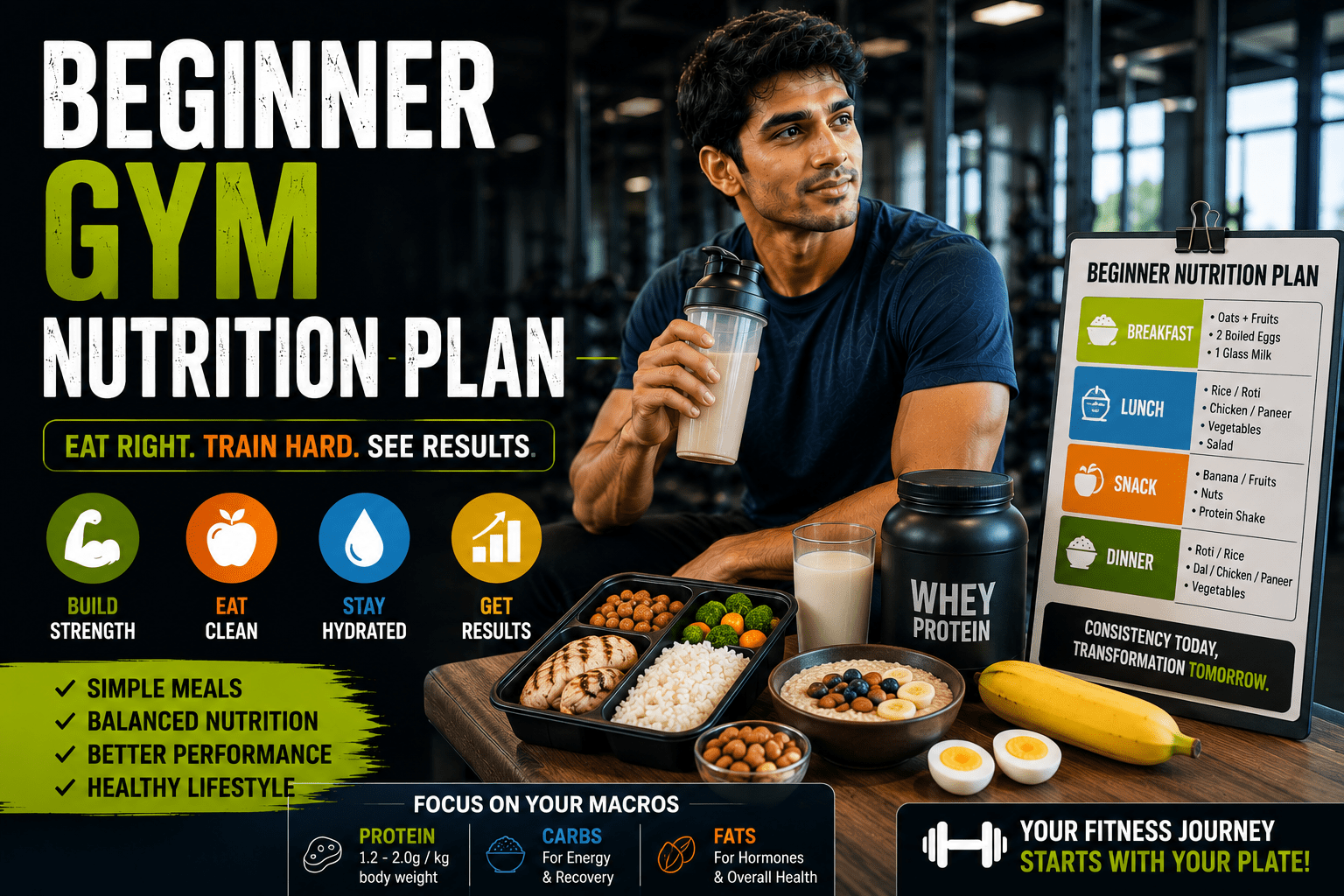
Simple Daily Meal Plan
Here is an example of how a beginner could structure a day.
Breakfast
Eggs with roti or whole grain toast, along with fruit and water or milk.
Mid Morning Snack
Greek yogurt with fruit or a small serving of roasted chickpeas.
Lunch
Rice or roti with chicken, fish, paneer, soy, or dal, along with vegetables and salad.
Pre Workout Snack
A banana with yogurt or milk and oats can be a simple option before training.
Post Workout Meal
Choose a protein source with carbohydrates. For example, paneer with roti, eggs with rice, or chicken with rice and vegetables.
Evening Snack
Milk, yogurt, boiled eggs, roasted chickpeas, or a suitable protein bar can work depending on your daily requirements.
Dinner
A balanced meal containing protein, vegetables, and a suitable carbohydrate source.
This is only an example. Portions should be adjusted according to your body size, activity level, goals, and total calorie requirements.
Protein Requirements for Beginners
Protein requirements vary between individuals.
For people who regularly perform resistance training, around 1.4 to 2.0 grams of protein per kilogram of body weight per day is a commonly used range.
For example, someone weighing 70 kilograms could consider approximately 98 to 140 grams of protein across the day.
This amount represents total daily protein, not a requirement from supplements or a single meal.
Whole foods should provide much of your protein whenever practical. Supplements can be considered when meeting nutritional requirements through food is difficult.
Pre Workout and Post Workout Nutrition
Good beginner gym nutrition plan habits include eating according to your training schedule without becoming overly focused on a strict eating window.
Before a workout, carbohydrates combined with some protein can be useful. A banana with yogurt, oats with milk, or eggs with toast are simple examples.
After training, a balanced meal containing protein and carbohydrates can support your overall nutrition.
You do not have to eat immediately after leaving the gym. Your total daily protein and calorie intake are more important than following an extremely narrow post workout window.
Common Mistakes to Avoid
Eating Too Little
Some beginners drastically reduce their food intake because they believe eating less will automatically produce better results. This can make training and recovery more difficult.
Depending Too Much on Supplements
Protein powder and other supplements can be convenient, but they should not replace a varied diet.
Ignoring Calories
Protein is important, but your total energy intake also affects weight gain and weight loss.
Copying Someone Else’s Diet
A diet that works for another gym member may not suit your body weight, lifestyle, activity level, or fitness goal.
Changing Everything at Once
Trying to completely redesign your diet overnight can be difficult to maintain. Build your routine gradually.
Frequently Asked Questions
What should a beginner gym nutrition plan include?
It should generally include adequate protein, carbohydrates, dietary fats, vegetables, fruits, fluids, and enough total energy to support the person’s specific goal.
How much protein does a gym beginner need?
For regular resistance training, approximately 1.4 to 2.0 grams of protein per kilogram of body weight per day is a commonly used range.
What should I eat before the gym?
A light meal or snack containing carbohydrates and some protein can work well. Yogurt with fruit, oats with milk, or eggs with toast are practical examples.
What should I eat after the gym?
A balanced meal containing protein and carbohydrates is a good option. Eggs with rice, paneer with roti, or chicken with rice and vegetables are simple choices.
Can beginners eat rice while following a gym diet?
Yes. Rice can easily fit into a balanced fitness diet. The appropriate portion depends on your calorie requirements and fitness goal.
Do beginners need protein supplements?
Not necessarily. Many people can meet their protein requirements through regular foods. Supplements are mainly a convenience option when dietary intake is difficult.
Conclusion
A successful beginner gym nutrition plan does not need to be complicated. Focus on regular protein intake, balanced carbohydrates, nutritious fats, fruits, vegetables, adequate hydration, and sensible portions.
Your workout creates the training stimulus, while food and recovery provide the foundation that helps your body adapt. Rather than chasing extreme diets, build habits that you can realistically maintain.
As your training experience increases, you can adjust your calorie and nutrient intake according to your specific fitness objective.
CTA
Start by planning tomorrow’s meals around a protein source, a suitable carbohydrate, vegetables or fruit, and enough fluids. Simple consistency is a much better starting point than an overly restrictive diet.