Sports Nutrition for Beginners
A Simple Guide to Eating for Better Training, Performance, and Recovery
Introduction
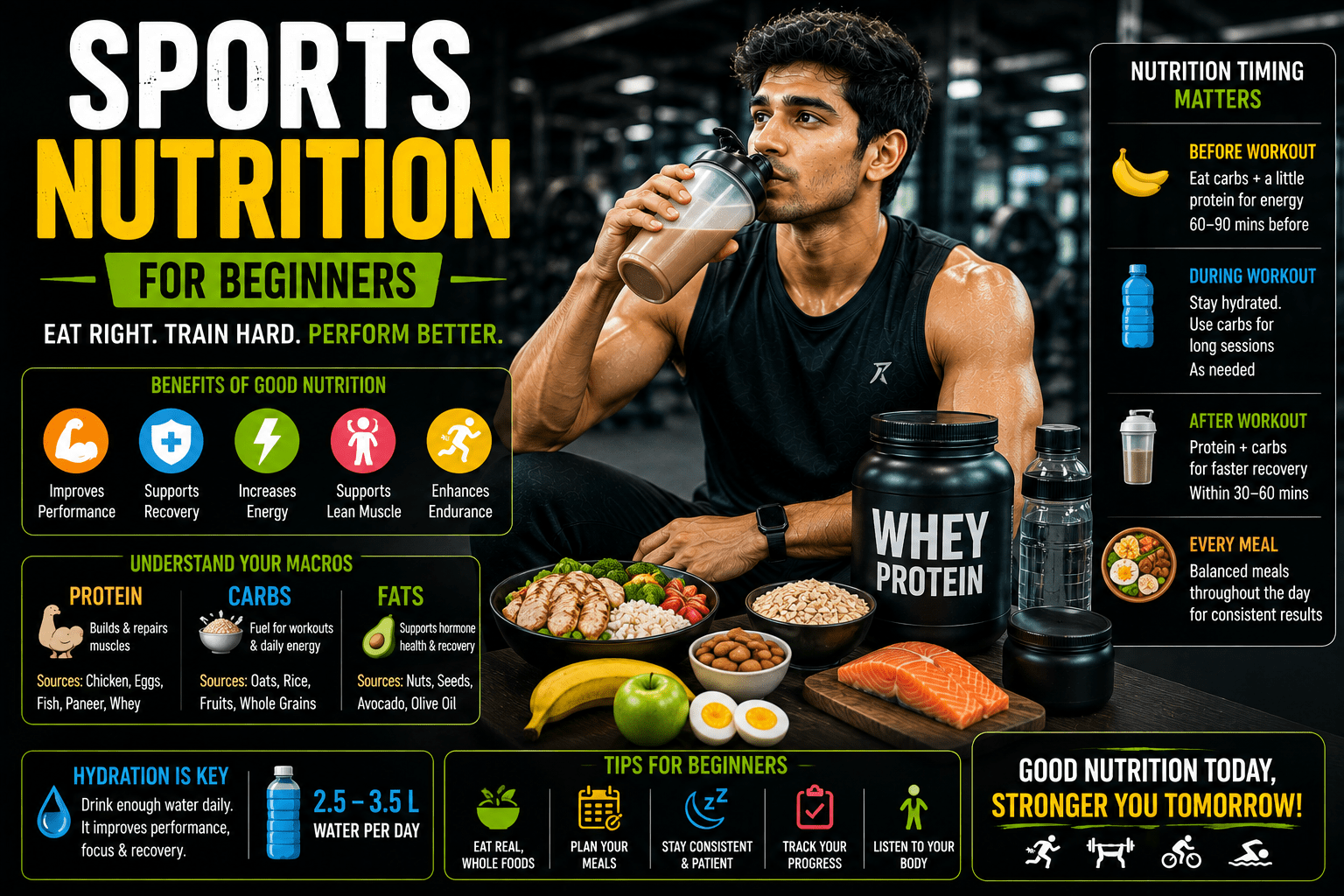
Starting a sport or regular training program requires more than physical effort. Your body also needs enough energy and nutrients to perform well and recover between sessions. This is where sports nutrition for beginners becomes important.
You do not need an expensive diet or a complicated supplement routine to get started. A practical nutrition plan can be built around everyday foods such as rice, roti, oats, fruits, vegetables, eggs, dairy, lentils, beans, paneer, chicken, and fish.
The right approach depends on your sport, training frequency, body size, and goal. Someone training for endurance may have different nutritional needs from someone focused mainly on strength and muscle development.
Table of Contents
- What Is Sports Nutrition?
- Why Nutrition Matters for Beginners
- 7 Essential Sports Nutrition Tips
- Protein Requirements
- Carbohydrates and Training Energy
- Hydration and Recovery
- Common Mistakes
- Frequently Asked Questions
- Conclusion
What Is Sports Nutrition?
Sports nutrition for beginners is the practice of choosing and timing food and fluids to support physical activity, recovery, health, and performance.
It involves more than protein. Carbohydrates, dietary fats, vitamins, minerals, fibre, fluids, and total calorie intake all have a role.
The goal is not to follow a perfect diet. Instead, it is to create eating habits that provide enough fuel for training while supporting your broader health.
Why Nutrition Matters for Beginners
When you train regularly, your body uses energy and needs nutrients to recover. Consistently eating too little can make training feel harder and may interfere with recovery.
On the other hand, eating more than your body needs can contribute to unwanted weight gain.
Good sports nutrition for beginners therefore starts with understanding your own requirements instead of copying another athlete’s diet.
7 Essential Sports Nutrition Tips
1. Build Meals Around Protein
Protein provides amino acids that your body uses for muscle repair and development.
Eggs, milk, yogurt, paneer, chicken, fish, soy, lentils, beans, and chickpeas can all contribute to your daily intake.
For people who regularly perform resistance training, approximately 1.4 to 2.0 grams of protein per kilogram of body weight per day is a commonly used range.
2. Use Carbohydrates for Fuel
Carbohydrates are an important energy source for physical activity.
Rice, roti, oats, potatoes, fruits, and whole grains can fit into a balanced sports diet.
There is no reason for most beginners to eliminate carbohydrates simply because they have started exercising.
3. Include Dietary Fats
Nuts, seeds, eggs, dairy, fish, and suitable cooking oils can contribute dietary fats.
Rather than avoiding fat completely, focus on food quality and appropriate portions.
4. Eat Enough Overall
A common beginner mistake is focusing so heavily on protein that total calorie intake is forgotten.
Your energy needs depend on training volume, body size, daily activity, and your specific goal.
Someone trying to gain weight may need more energy, while someone trying to lose body fat may need controlled calorie intake.
5. Stay Hydrated
Hydration is essential during physical activity.
Water is usually a practical choice for everyday training. During prolonged exercise or heavy sweating, fluid and electrolyte needs may increase.
Pay attention to your thirst, training duration, weather, and amount of sweating rather than following one fixed rule for everyone.
6. Plan Your Meals Around Training
Good sports nutrition for beginners does not require complicated timing.
A meal containing carbohydrates and protein before training can provide useful fuel. Examples include oats with milk, yogurt with fruit, or eggs with toast.
After training, a normal balanced meal containing protein and carbohydrates can support your overall nutritional needs.
7. Give Recovery Enough Attention
Training is only one part of progress.
Adequate sleep, hydration, sufficient food, and rest between demanding sessions all contribute to recovery.
Even an excellent diet cannot completely compensate for consistently poor recovery habits.
Protein Requirements
Your protein needs depend on your body weight, training, age, diet, and fitness goal.
For regular resistance training, around 1.4 to 2.0 grams per kilogram of body weight per day is a commonly used range.
For example, someone weighing 70 kilograms could consider approximately 98 to 140 grams of protein per day.
This is total protein from your complete diet. It does not mean you need to consume that amount through protein powder.
Carbohydrates and Training Energy
Carbohydrates deserve particular attention in sports nutrition for beginners because they can provide an important source of energy during exercise.
For example, an athlete preparing for a demanding training session may benefit from having rice, oats, fruit, potatoes, or another carbohydrate source as part of their meals.
The appropriate amount depends on the type and duration of exercise.
A person doing a short gym workout does not necessarily have the same carbohydrate requirements as someone completing prolonged endurance training.
Hydration and Recovery
Your hydration needs can change according to temperature, exercise intensity, duration, and sweating.
During normal daily activity, drinking water regularly and responding to thirst is a sensible approach.
After demanding training, replace fluids and continue eating balanced meals.
Recovery also requires adequate sleep. Beginners often focus on training harder while ignoring rest, but your body needs time between demanding sessions.
Common Mistakes
Copying a Professional Athlete’s Diet
Professional athletes may have completely different training volumes, schedules, and nutritional support.
Removing Carbohydrates
Carbohydrates can be useful fuel for exercise and do not need to be eliminated automatically.
Taking Too Many Supplements
Supplements are not a replacement for a balanced diet. Some products have evidence for specific uses, while others may provide little practical benefit.
Ignoring Total Calories
Protein alone does not determine whether your body weight increases or decreases.
Expecting Immediate Results
Fitness improvements take time. Consistent training and nutrition are more valuable than constantly changing your routine.
Frequently Asked Questions
What is sports nutrition for beginners?
It is an approach to eating and hydration that supports exercise performance, recovery, health, and individual fitness goals.
What should a beginner eat before sports training?
A meal or snack containing carbohydrates and some protein can be useful. Examples include oats with milk, yogurt with fruit, or eggs with toast.
How much protein does a beginner athlete need?
People regularly performing resistance training commonly use approximately 1.4 to 2.0 grams of protein per kilogram of body weight per day as a practical range.
Are carbohydrates important for athletes?
Yes. Carbohydrates can provide an important source of energy during physical activity, particularly during demanding or prolonged exercise.
Do beginners need sports supplements?
Not necessarily. Beginners should establish a balanced diet and consistent training routine first. Specific supplements can be considered when there is a clear reason to use them.
How important is hydration in sports nutrition?
Hydration supports normal physical function and is especially important during exercise and hot conditions. Fluid requirements vary between individuals and activities.
Conclusion
Good sports nutrition for beginners is not about following the most complicated diet available. It is about providing your body with enough energy and nutrients to train, recover, and stay healthy.
Build meals around nutritious protein sources, include useful carbohydrate foods, add appropriate dietary fats, eat enough overall, stay hydrated, and give your body sufficient time to recover.
Most importantly, keep your approach realistic. A simple nutrition routine that you can follow consistently is far more useful than an extreme plan that becomes difficult to maintain.
CTA
Start by improving the basics of your daily diet before worrying about complicated sports nutrition strategies. Consistent meals, proper hydration, quality sleep, and regular training can provide a strong foundation for long term progress.