Best Supplements for Gym Beginners
A Practical Guide to Choosing Supplements Without Wasting Money
Introduction
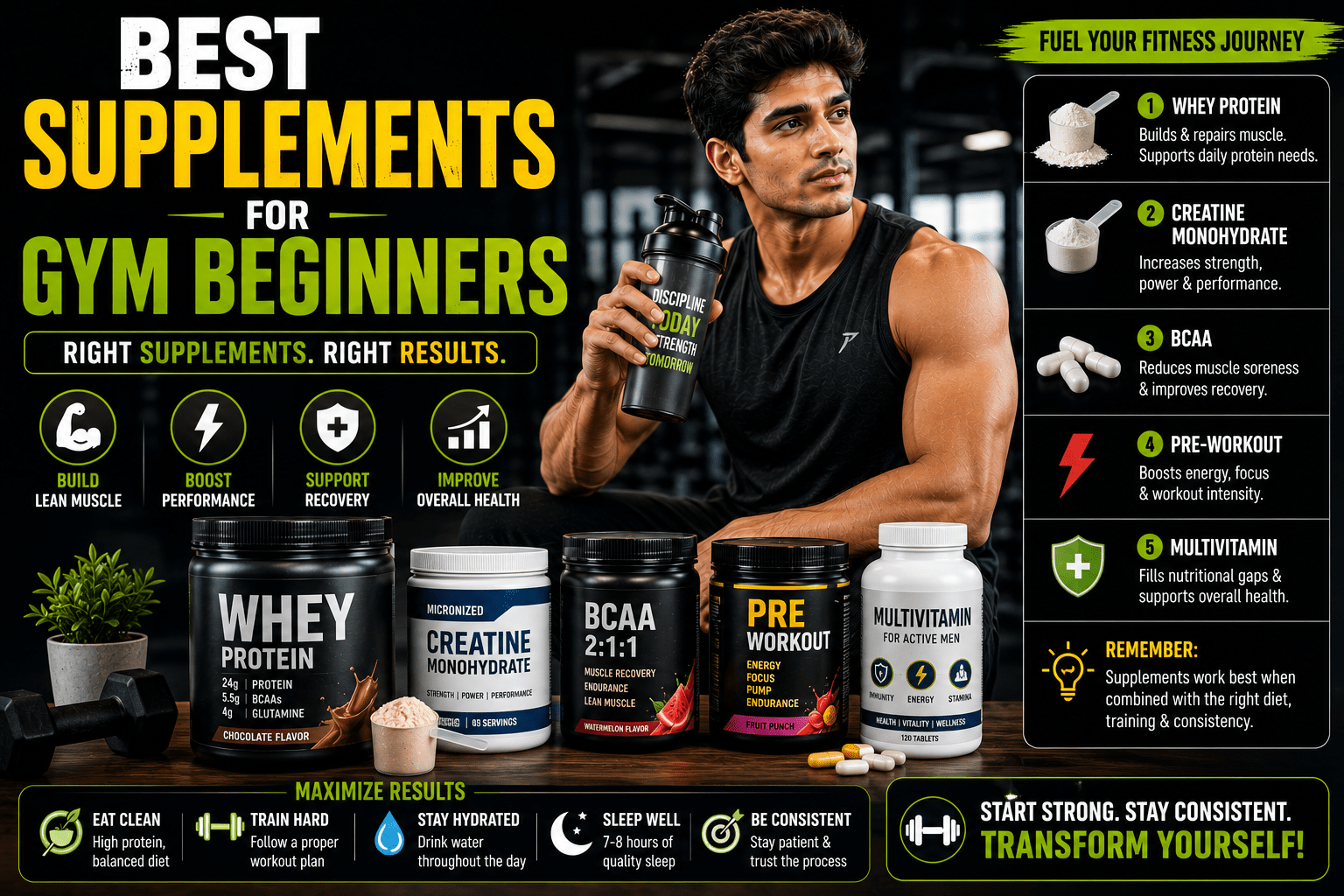
When you start going to the gym, you quickly notice that supplements are everywhere. Protein powder, creatine, pre workout drinks, multivitamins, amino acids, and many other products are marketed toward people who want better fitness results. But which are actually worth considering?
Understanding the best supplements for gym beginners starts with an important rule: supplements should support a good diet and training routine, not replace them.
If your meals are inconsistent, you are not getting enough protein, or you are sleeping poorly, buying several supplements will not fix those problems. A better strategy is to build the basics first and then consider a supplement that solves a specific need.
Table of Contents
- Do Gym Beginners Need Supplements?
- 7 Supplements Beginners Should Understand
- How to Choose a Supplement
- Common Mistakes
- Frequently Asked Questions
- Conclusion
Do Gym Beginners Need Supplements?
No, supplements are not automatically necessary for everyone who joins a gym.
A beginner can make significant progress with regular resistance training, adequate calories, sufficient protein, nutritious foods, hydration, and proper sleep.
However, some supplements can be useful because they provide convenience or have evidence supporting specific purposes. The important part is understanding what a product can realistically do.
The best supplements for gym beginners are therefore not necessarily the products with the most impressive marketing. They are the products that have a clear purpose and fit your individual needs.
7 Supplements Beginners Should Understand
1. Protein Powder
Protein powder can be useful when your normal meals do not provide enough protein.
Whey protein is a convenient complete protein source, while plant based powders can work for people who prefer vegetarian or plant focused options.
For people regularly performing resistance training, approximately 1.4 to 2.0 grams of protein per kilogram of body weight per day is a commonly used range.
Protein powder is simply a convenient way to help reach that target. It does not automatically build muscle without appropriate training and nutrition.
2. Creatine Monohydrate
Creatine monohydrate is one of the most researched sports supplements.
Research supports its use for improving performance during repeated short periods of high intensity exercise, including resistance training.
It can also cause some increase in body weight because of increased water stored in muscle. For healthy adults, creatine is generally considered safe when used appropriately.
For beginners interested in the best supplements for gym beginners, creatine is worth understanding because its evidence base is stronger than many heavily marketed products.
3. Vitamin D
Vitamin D has important roles in normal bone health, muscle function, and other body processes.
However, taking large amounts simply because you started exercising is not a good approach. If you have a deficiency or are at risk of deficiency, a healthcare professional can help determine whether supplementation is appropriate.
4. Multivitamins
A multivitamin may be useful in specific dietary situations, but it is not a replacement for nutritious food.
If your diet already contains a variety of fruits, vegetables, whole grains, dairy or suitable alternatives, protein sources, and other nutrient rich foods, you may not need a multivitamin.
5. Caffeine
Caffeine can improve alertness and may support performance in certain types of exercise.
It is commonly found in coffee as well as some pre workout products. However, individual sensitivity varies, and excessive intake can cause unwanted effects such as difficulty sleeping or feeling restless.
Beginners should be particularly careful about taking multiple caffeine containing products together.
6. Electrolytes
Electrolyte products may be useful during prolonged or particularly sweaty exercise, especially in hot conditions.
For a normal gym session, plain water is often sufficient for many people. Whether electrolytes are useful depends on exercise duration, sweating, weather, and individual circumstances.
7. Omega 3 Supplements
Omega 3 supplements can provide EPA and DHA, fatty acids commonly obtained from foods such as fatty fish.
Whether supplementation is necessary depends on your usual diet and individual needs. If you rarely consume dietary sources of omega 3, discussing supplementation with a qualified professional may be worthwhile.
How to Choose a Supplement
When comparing the best supplements for gym beginners, look beyond the front of the package.
Check the ingredient list, serving size, amount of active ingredients, recommended use, manufacturer information, and quality testing where available.
Avoid products promising instant muscle growth, effortless fat loss, or dramatic transformations.
A good supplement should have a clear purpose. If you cannot explain why you are taking a product, it may not deserve a place in your routine.
Common Mistakes
Buying Too Many Products
You do not need a cupboard full of supplements when you are just starting.
Replacing Meals With Shakes
Protein powder can be convenient, but whole foods provide many nutrients that a single supplement may not provide.
Ignoring Sleep
Taking supplements while consistently sleeping poorly is not a sensible fitness strategy.
Copying Another Gym Member
Your diet and supplement needs may be different from someone else’s because body weight, training, diet, lifestyle, and goals vary.
Taking Excessive Amounts
Higher doses do not automatically produce better results. Some ingredients can cause unwanted effects when consumed excessively.
Frequently Asked Questions
What are the best supplements for gym beginners?
Protein powder and creatine monohydrate are among the most commonly considered options for resistance training. Whether you need them depends on your diet and goals.
Should beginners take protein powder?
Protein powder can be useful if you struggle to meet your daily protein needs through food. It is not essential for everyone.
Is creatine good for gym beginners?
Creatine monohydrate has strong research supporting its use for repeated high intensity exercise. Healthy adults generally tolerate it well when used appropriately.
Do beginners need pre workout supplements?
No. Pre workout products are optional. Caffeine may help some people with exercise performance, but beginners should consider their caffeine tolerance and sleep.
Should I take a multivitamin when I start the gym?
Not automatically. A varied diet should remain the foundation. Supplementation can be considered when there is a specific nutritional need.
Can supplements replace a healthy diet?
No. Supplements are intended to complement nutrition rather than replace a balanced diet.
Conclusion
Finding the best supplements for gym beginners does not mean buying every product recommended by influencers or other gym members.
Start with the fundamentals: consistent training, adequate protein, balanced meals, enough calories for your goal, hydration, and quality sleep. Once those habits are established, consider whether a specific supplement provides a genuine benefit or simply adds unnecessary expense.
Protein powder can provide convenience, while creatine monohydrate has strong evidence for supporting performance during high intensity exercise. Other supplements should be evaluated according to your diet and individual requirements.
The smartest supplement routine is usually the simplest one that serves a clear purpose.
CTA
Before adding any supplement to your routine, check what it contains, understand why you need it, and consider whether your diet already provides the same nutrients. Informed choices are a better foundation for long term fitness than following trends.