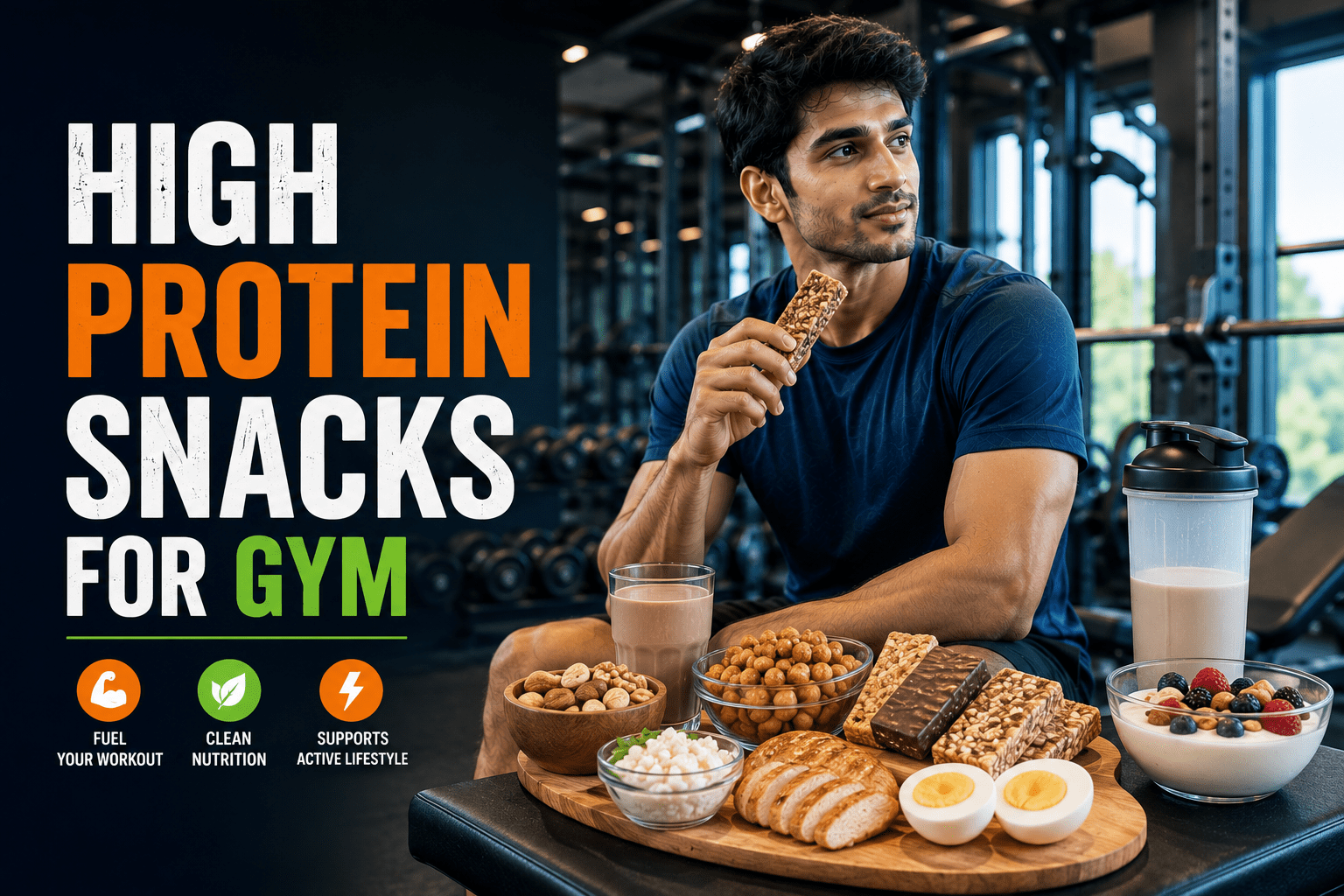
High Protein Snacks for Gym
10 Easy and Practical Snacks to Support Your Fitness Goals
Introduction
Choosing the right food around your workouts can make your fitness routine easier to maintain. If you regularly train at the gym, high protein snacks for gym sessions can help you add quality protein to your daily diet without depending on large meals every few hours.
Protein provides amino acids that your body uses for muscle repair and development. However, one snack does not determine your results. Your total daily protein intake, training routine, calorie intake, sleep, and recovery all matter.
The good news is that you do not need complicated recipes. Simple foods such as eggs, Greek yogurt, milk, roasted chickpeas, paneer, nuts, and a suitable protein bar can work well.
Table of Contents
- Why Protein Matters for Gym Goers
- 10 High Protein Snacks for Gym
- Pre Workout and Post Workout Snack Ideas
- How Much Protein Do You Need?
- Common Snacking Mistakes
- Frequently Asked Questions
- Conclusion
Why Protein Matters for Gym Goers
Resistance training creates a stimulus for muscle adaptation, while adequate nutrition provides the nutrients needed for recovery. Regular exercisers generally need more protein than sedentary adults. The International Society of Sports Nutrition places the commonly recommended range for physically active people around 1.4 to 2.0 grams of protein per kilogram of body weight per day.
For example, a person weighing 70 kilograms could consider approximately 98 to 140 grams of protein across the day, depending on their training and individual needs.
This does not mean every snack needs to contain a huge amount of protein. Several moderate protein meals and snacks can make your daily target easier to achieve.
10 High Protein Snacks for Gym
1. Boiled Eggs
Eggs are simple, affordable, and easy to prepare. They can work well as a snack between meals or alongside a carbohydrate source such as fruit or whole grain toast.
2. Greek Yogurt
Greek yogurt can provide a convenient combination of protein and other nutrients. Choose a version that fits your calorie and sugar preferences.
3. Paneer
Paneer is a useful vegetarian protein option. You can eat a small portion with vegetables or use it in a simple homemade snack.
4. Roasted Chickpeas
Roasted chickpeas are portable and provide protein along with carbohydrates and fibre. They can be particularly convenient when you want something crunchy.
5. Milk
A glass of milk is an easy option when you need a quick snack. It can also be combined with fruit or oats for a more substantial option.
6. Cottage Cheese With Fruit
Cottage cheese can provide protein while fruit adds carbohydrates and flavour. This combination can work well as a simple snack between meals.
7. Peanut Butter With Whole Grain Toast
Peanut butter provides protein and healthy fats, while whole grain toast provides carbohydrates. Because peanut butter is calorie dense, portion size matters if you are monitoring calories.
8. Protein Bar
A suitable protein bar can be useful when you are travelling, working, or heading directly from the gym to another activity. Check the nutrition label rather than choosing a product only because it says high protein.
9. Soy Chunks
Soy based snacks can be a useful plant based protein option. They are especially practical for people who want to include more vegetarian protein sources in their diet.
10. Homemade Protein Smoothie
A simple smoothie made with milk or yogurt, fruit, oats, and a protein source can be convenient when you have more time to prepare your snack.
Pre Workout and Post Workout Snack Ideas
The best snack depends partly on when you are eating.
Before training, a combination of protein and carbohydrates can be useful. For example, yogurt with fruit or milk with oats can provide both nutrients.
After training, you can choose options such as eggs with toast, Greek yogurt with fruit, paneer with roti, or a protein smoothie.
The important point is not to become overly focused on a strict minute by minute eating window. Your total daily nutrition remains important for long term progress. ACSM notes that regular resistance training combined with adequate nutrient intake supports muscle development and recovery.
How Much Protein Do You Need?
Your individual requirement depends on factors such as body weight, training volume, goals, age, and overall diet.
For someone who regularly performs resistance training, the commonly used range of 1.4 to 2.0 grams per kilogram per day provides a practical starting point.
For example:
60 kg: approximately 84 to 120 grams daily
70 kg: approximately 98 to 140 grams daily
80 kg: approximately 112 to 160 grams daily
These numbers represent total daily protein, not the amount you need from snacks alone.
Common Snacking Mistakes
One common mistake is choosing a snack simply because it is labelled high protein. Always check the actual protein amount.
Another is forgetting calories. Nuts, peanut butter, cheese, and some protein bars can be calorie dense, so portion size matters.
It is also a mistake to rely entirely on packaged snacks. Whole foods should make up an important part of a balanced diet.
Finally, remember that protein cannot replace proper training. Muscle development requires a consistent resistance training program along with adequate nutrition and recovery.
Frequently Asked Questions
What are the best high protein snacks for gym beginners?
Eggs, Greek yogurt, milk, paneer, roasted chickpeas, soy, and suitable protein bars are practical choices for beginners.
What should I eat after the gym?
A snack containing protein can be useful after training. Examples include yogurt with fruit, eggs with toast, paneer with roti, or a protein smoothie.
Are high protein snacks necessary for muscle gain?
They are not mandatory. You can meet your protein requirements through regular meals. Snacks simply make it easier when your meals do not provide enough protein.
How much protein should I eat after a workout?
There is no single amount that works for everyone. Your total daily protein intake is more important than trying to reach a specific number immediately after every workout.
Can vegetarians eat high protein snacks?
Yes. Paneer, Greek yogurt, milk, soy, lentils, chickpeas, beans, nuts, and other vegetarian foods can contribute to daily protein intake.
Can I eat high protein snacks while trying to lose fat?
Yes. Choose snacks that provide useful protein while fitting your overall calorie target. Portion size and the complete daily diet still matter.
Conclusion
The best high protein snacks for gym users are not necessarily expensive or complicated. Eggs, yogurt, paneer, milk, roasted chickpeas, soy, nuts, protein bars, and simple smoothies can all have a place in a balanced fitness diet.
Focus on your total daily protein intake rather than relying on one particular snack. Combine adequate protein with progressive resistance training, sufficient calories, hydration, and quality sleep for a more sustainable approach to fitness.
CTA
Choose two or three convenient protein snacks that you genuinely enjoy and keep them available during the week. A simple routine is much easier to maintain than a complicated diet plan.